AI Screening You First? How to Ace Every Bot Interview in 2026
AI interviews are now the norm for 63% of US job seekers. Learn exactly how to prepare for and ace every bot interview format in 2026 with this step-by-step guide.
AI Screening You First? How to Ace Every Bot Interview in 2026
You hit "Apply." A few minutes later, an email arrives. Not from a recruiter, but from an automated system asking you to complete a video or chat interview right now. No human on the other end. No second chances. Just you, a camera or a text box, and an algorithm deciding whether you make the cut.
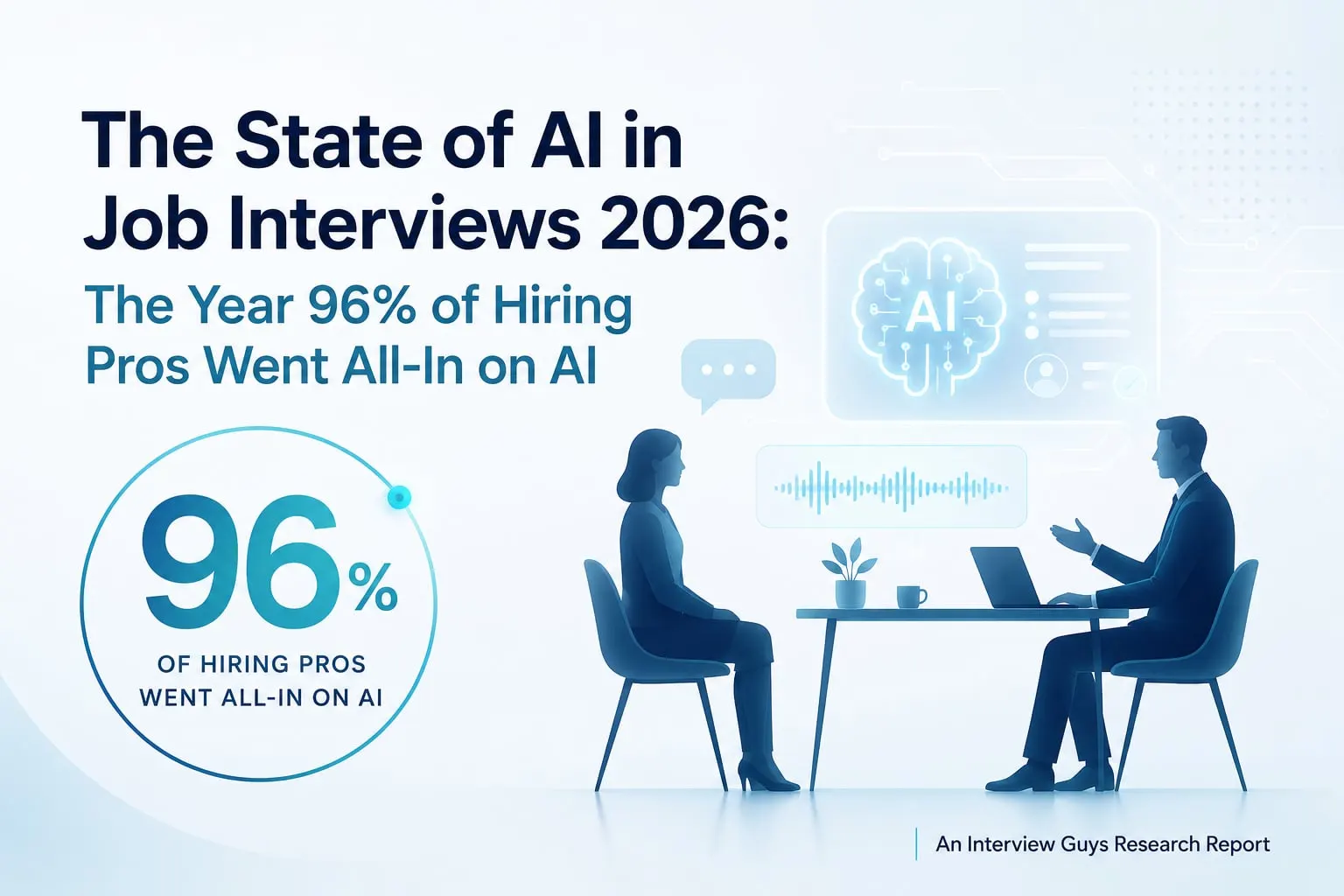
This is the 2026 hiring reality for most job seekers. Nearly two-thirds of US candidates (63%) have already experienced an AI interview in the past six months, according to Greenhouse's 2026 survey of 2,950 job seekers across five countries. AI-conducted interviews more than tripled in just two years (from 10% to 34%), and two-thirds of recruiters plan to expand AI pre-screening in 2026. If you're job searching this year and you haven't prepped specifically for bot interviews, you are almost certainly being filtered out before a human ever reads your name.
By the end of this article, you'll know exactly what AI screening systems are evaluating, how to structure your answers to pass their filters, which platforms you're most likely to encounter, and what mistakes cause otherwise-qualified candidates to get silently rejected. Let's get specific.
What AI interview systems are actually evaluating
The temptation is to treat an AI interview like a slightly awkward video call. That's a losing strategy. AI screening tools run structured, systematic analysis across several dimensions simultaneously, and most candidates have no idea which boxes they're failing to tick.
Here's what the algorithm is actually looking for:
- Keyword and concept alignment with the job description. Your spoken or written answers are scanned for terminology directly linked to the role. If the posting emphasises "pipeline management," "cross-functional stakeholder communication," or "data-driven decision-making," the AI expects those concepts to appear naturally in your responses. Silence on a key theme is treated as absence of the skill.
- Structural coherence of your answers. AI systems reward answers that follow a logical arc (situation, action, result) because structured responses are easier to score consistently and signal organised thinking. Rambling, tangential answers score poorly regardless of content quality.
- Communication clarity and pacing. Video and voice AI platforms (like HireVue) analyse delivery patterns: filler words, response length relative to question complexity, and whether your pacing stays consistent. Extreme over-answering and extreme under-answering are both flagged.
- Personality and cognitive trait signals. Platforms like Pymetrics use neuroscience-based games to map emotional and cognitive data to role requirements. Sapia.ai reads personality traits from open-ended text responses, not multiple-choice checkboxes. You can't game these by saying the "right" words; you need genuine, specific examples.
- Consistency across the session. Unlike a human who might forgive an awkward early answer, AI systems score every response independently and then look for patterns across the full session. One strong answer doesn't rescue three weak ones.
Your step-by-step preparation framework

Step 1: Decode the job description before you start (15-30 minutes)
Open the job posting and highlight every skill, outcome, and methodology mentioned more than once. These are the algorithm's priority keywords. Paste them into a document. Your goal is to build a personal answer library where each answer naturally incorporates two or three of these terms. Don't stuff keywords artificially; weave them into real examples.
Step 2: Build a STAR bank of 8-10 stories (1-2 hours)
STAR stands for Situation, Task, Action, Result. This framework isn't just for human interviews. It maps almost perfectly onto what AI scoring rubrics reward: context, your specific contribution, and a measurable outcome. Aim for eight to ten distinct stories drawn from the last three to five years of your work or academic life. Cover a range of themes: a time you solved a problem, handled conflict, led a project, failed and recovered, and collaborated across teams. The variety matters because AI systems ask unpredictable follow-ups.
For each story, write a one-sentence result with a number or percentage if possible. "Reduced onboarding time by 30%" outperforms "improved the onboarding process" in both AI and human scoring.
Step 3: Research the specific platform you'll be using (20 minutes)
The email invitation or the company's careers page usually names the tool. Common platforms in 2026 include:
- HireVue: one-way video interviews with a broad assessment library including game-based evaluations; serves 700+ enterprise clients across 40+ languages
- Paradox (Olivia): conversational AI that screens via SMS and chat, now part of Workday after its 2025 acquisition; widely used by high-volume hourly employers across 100+ languages
- Pymetrics: cognitive and emotional trait games; the score is based on how you play, not just what you answer
- Sapia.ai: open-ended text interviews scored on personality trait signals
- Spark Hire: one-way video with AI analytics; popular with mid-market companies managing high-volume recruiting
- Conversational AI interviewers (HeyMilo, Alex, Ribbon): autonomous voice or video interviews with adaptive follow-up questions based on what you say
Each platform has published practice environments or demo videos. Watch at least one before your session so the interface doesn't surprise you.
Step 4: Set up your environment for video AI interviews (30 minutes)
For platforms that analyse video, your physical setup matters in ways it doesn't for a human who'll forgive a messy background. Use a plain, uncluttered background. Position your camera at eye level. Laptop screens sitting flat on a desk put the camera below your chin, which is unflattering and reduces perceived confidence. Light your face from the front (a ring light or a lamp placed in front of you, not behind). Test your microphone separately from your speakers to confirm there's no echo. Silence notifications. These aren't cosmetic niceties; they eliminate distractions that can break your answer structure mid-response.
Step 5: Do a timed dry run with your own recording (45 minutes)
Record yourself answering five practice questions using a timer. Target 90 seconds to 2.5 minutes per answer for most one-way video formats. Watch the recording with the sound off to check your body language, then listen without watching to check your pacing and filler words. Adjust and record again. Candidates who skip this step consistently over-answer (3 to 5 minutes per response) or under-answer (30 seconds), both of which are scoring red flags.
Step 6: Know your rights and the limits of AI rejection (10 minutes)
Only 29% of companies maintain full human oversight on all AI rejection decisions. Half use AI exclusively for initial screening rejections, and 21% allow AI to reject candidates at all stages without human review. In many jurisdictions, you have the right to request a human review of an AI hiring decision. Knowing this won't change your AI interview performance, but if you're confident you were a strong fit for a role and received an automated rejection, a polite, specific follow-up email requesting human review is a legitimate step.
Question-by-question breakdown: the five AI interview scenarios you need to nail
"Tell me about yourself."
Why AI asks it: This is a baseline calibration question. AI systems use it to establish your communication style, gauge keyword density relative to the role, and confirm basic role alignment before the structured questions begin.
What to do: Use a 60 to 90 second "Present-Past-Future" structure. Start with your current role and one key accomplishment, reference relevant past experience, then connect to why you want this specific role. Keep it tight.
Example answer: "I'm currently a project coordinator at a logistics firm where I manage cross-functional workflows for a team of twelve. Over the past two years, I've reduced project delivery delays by 22% by implementing a centralised tracking system. Before that, I spent three years in operations at a smaller startup, which gave me a strong foundation in process design from the ground up. I'm applying for this role because I want to bring that same process-improvement focus to a larger, more complex supply chain environment."
Customise it: Swap in two or three keywords from the job description in the "current role" portion, naturally, not as a list.
"Describe a time you solved a difficult problem."
Why AI asks it: This is a core competency question targeting analytical thinking, initiative, and resilience. AI systems score it on structural clarity (STAR adherence), specificity of your action, and measurability of the result.
What to do: Pull directly from your STAR bank. Avoid vague problem descriptions. Name the specific constraint, the specific action you took (not "we"), and the specific outcome.
Example answer: "In Q3 last year, our team's client renewal rate dropped to 61%, well below our 75% target. I analysed three months of exit survey data and identified that clients were churning within the first 60 days, before they'd seen the core product value. I redesigned our onboarding email sequence to front-load the two features clients cited as most valuable, and I built a 30-day check-in call into the standard process. By Q1 of the following year, our 60-day retention rate had improved to 84%, and annual renewals reached 79%."
Customise it: Match the "problem domain" to the industry. A marketing role example should involve a marketing constraint; an ops role should involve a process or efficiency problem.
"Why do you want to work here?"
Why AI asks it: Motivation screening. AI systems check for specificity (evidence you know the company) versus generic enthusiasm (evidence you copy-pasted the same answer everywhere).
What to do: Name one specific fact about the company (a product, a recent initiative, a publicly documented value) and connect it directly to something in your own experience or goals. One specific sentence beats three generic ones.
Example answer: "I've followed [Company]'s shift toward AI-assisted supply chain planning over the past 18 months, and the case study you published on reducing last-mile costs by 31% in Southeast Asia directly relates to the kind of challenge I've been working on. I want to be part of a team that's already solving that problem at scale, rather than one that's still defining the problem."
"What is your greatest weakness?"
Why AI asks it: Self-awareness and coachability scoring. The AI isn't looking for humility theatre. It checks whether your answer is specific, honest, and paired with evidence of active improvement.
What to do: Name a genuine, manageable weakness. Describe one concrete step you've taken to address it. Close with a recent data point showing progress.
Example answer: "I used to struggle with delegating tasks when deadlines were tight. My instinct was to take things on myself to make sure they were done right. Over the past year, I've been intentional about changing that. I started using a weekly task allocation review with my team and committed to handing off at least two non-critical tasks per sprint. My team's output has increased by about 15% as a result, and I've had more bandwidth for the strategic work where I add the most value."
Conversational AI follow-up: "Can you give me a specific example of that?"
Why AI asks it: Adaptive follow-up questions are a hallmark of conversational AI platforms like Paradox and the newer autonomous interviewers (HeyMilo, Ribbon). The system detects a claim in your answer and probes for evidence. Candidates who give vague first answers get caught here.
What to do: Never make a claim you don't have a specific story to back up. If you say "I'm a strong communicator," you should have a two-minute STAR story ready for the inevitable follow-up. The easiest defence is to lead with specifics in your first answer, which reduces the probability of a difficult follow-up.
Mistakes that eliminate candidates from AI screening
Using the same answer for every application. AI systems are calibrated to the specific job description. Generic answers that don't reflect the role's language score significantly lower than tailored ones. Fix: Spend ten minutes customising your top three answers for each new role.
Ignoring the time limit and significantly over-answering. Most AI platforms flag responses that are more than 30 to 40% longer than the expected range. This reads as poor communication structure, not thoroughness. Fix: Time every practice answer and cut to fit the 90-second to 2.5-minute window.
Starting answers with filler before substance. "That's a great question, so basically what I would say is..." consumes 15 seconds of your response window and scores as low-confidence language. Fix: Begin every answer with a direct, declarative sentence.
Treating game-based assessments (Pymetrics) as optional or low-stakes. Candidates rush through cognitive games assuming they're a formality. The scoring is real. Your reaction time, risk tolerance, and cognitive load management all generate data that informs hiring decisions. Fix: Do the games when you're alert, not late at night, and follow any provided practice materials first.
Not confirming your technical setup before the session starts. Freezing video, dropped audio, or poor lighting mid-answer is non-recoverable in a one-way format. Fix: Test your device, internet connection, camera, and microphone at least one hour before the session, not five minutes before.
Treating AI interviews as less serious than human ones. Candidates report being less prepared, less formally dressed, and less focused for AI interviews. The algorithm doesn't grade on a curve. Fix: Prepare with the same rigour you'd apply to a panel interview with the hiring manager.
Immediately actionable AI interview prep checklist
Use this the week of your AI interview session:
- Highlight all repeated skills and outcomes in the job description; build a keyword list
- Write or update 8-10 STAR stories covering problem-solving, collaboration, failure/recovery, leadership, and role-specific competencies
- Identify the specific AI platform named in your interview invitation and find its demo or practice environment
- Record yourself answering five practice questions; review for pacing, filler words, and answer length
- Set up and test your camera (eye-level), microphone (no echo), lighting (front-facing), and background (uncluttered)
- Silence all notifications and close all browser tabs before the session begins
- Prepare a customised "tell me about yourself" answer that uses 2-3 keywords from this specific job description
- If the platform uses game-based assessments, schedule them during your peak cognitive hours (typically mid-morning)
- Draft a follow-up email to send within 24 hours of completing the session, reiterating your interest and one key qualification
- Research your rights: know whether the employer's jurisdiction requires human review of AI hiring rejections
Frequently asked questions about AI interviews in 2026
Can the AI really tell if I'm nervous?
Video AI platforms like HireVue do analyse delivery signals including pace, vocal consistency, and filler word frequency. They are designed to score for content and structure, not to penalise normal human nerves. A slight verbal stumble won't fail you; a structurally incoherent, keyword-empty answer will. Focus your energy on structuring your answers clearly rather than trying to perform artificial composure.
Should I mention that I know I'm talking to an AI?
You can, briefly, but it isn't necessary and it typically takes up valuable response time. Some conversational AI platforms are designed to handle the acknowledgement gracefully. More importantly, treat every answer as if a hiring manager will review the full transcript, because in most cases the human interview stage (if you advance) will include a review of your AI session.
How long should my answers be in a one-way video interview?
For most platforms, 90 seconds to 2.5 minutes per answer is the target range. Some platforms display a countdown timer; others let you talk until you stop. If there's no timer, aim for the shorter end. Tight, specific answers outperform lengthy ones. Practise until you can hit a consistent 90-second window without rushing.
What happens if the technology fails during my AI interview?
Stop immediately and email the company's talent acquisition or recruiting contact (not the automated system address) with a clear description of what happened, the timestamp, and a screenshot if possible. Most platforms have a technical support or retake request process. Acting quickly and professionally signals exactly the kind of problem-solving behaviour the interview was designed to assess.
Do AI interviews discriminate? Are they fair?
This is a legitimate and evolving concern. Some platforms have faced scrutiny for potential bias in video analysis. Reputable enterprise tools like HireVue have published transparency reports and bias audits. As a candidate, you can ask the recruiter what AI tool is being used and whether bias audits are available. In some jurisdictions (New York City's Local Law 144 is one example) employers using AI hiring tools are required to conduct and disclose annual bias audits. Knowing your rights is part of navigating the modern hiring process.
The AI interview isn't going away. It's becoming the standard first filter at companies of every size. The candidates who will thrive in 2026 aren't the ones trying to "trick the algorithm." They're the ones who understand exactly what's being measured, build a library of structured, specific, keyword-aligned answers, and treat the bot interview with the same seriousness they'd give the hiring manager sitting across the table. Prepare accordingly, and you'll consistently land in that coveted 2% who make it to the next round.
Editor's Picks
 News
News AI Layoffs 2026: Record Profits, Pink Slips & Jobs That Survive
Jul 20, 2026
 Industries
 AI & ML Engineer Jobs 2026: Salaries, Skills & How to Break In
Jul 20, 2026
 Skills
 AI Skills Non-Tech Workers Actually Need to Get Hired in 2026
Jul 20, 2026
 Job Search
 Hidden Job Market 2026: Land Roles Never Posted Online
Jul 20, 2026