Indeed-Glassdoor Merger 2026: What Job Seekers Must Do Now
The Indeed-Glassdoor merger is reshaping job searching in 2026. Here's exactly what job seekers must do now to protect their data, profiles, and search strategy.
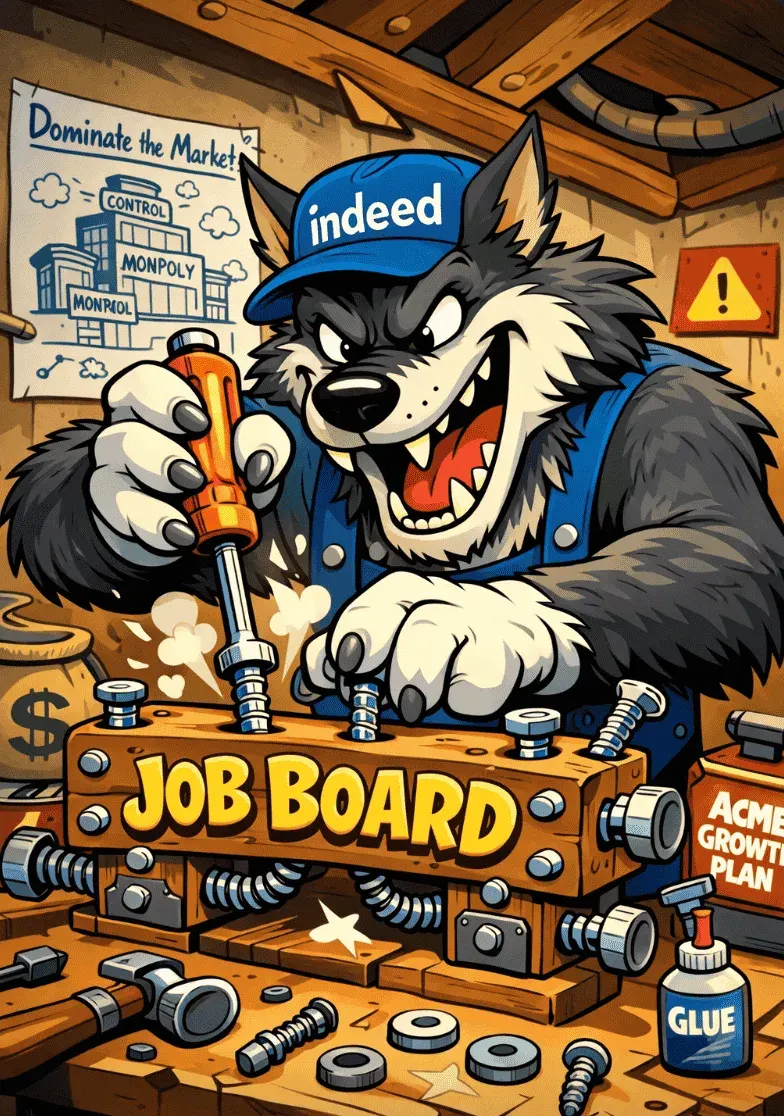
Indeed-Glassdoor Merger 2026: What Job Seekers Must Do Now
If you've used Indeed or Glassdoor to find a job, research a company, or post an anonymous salary review in the last few years, the ground has shifted beneath you, and most job seekers haven't noticed. The formal consolidation of Indeed and Glassdoor, announced in mid-2025 and now fully in effect, has changed how both platforms work, what data gets shared between them, and whether your Glassdoor reviews are truly anonymous. This article is for anyone actively or passively job searching in 2026 who wants to understand what changed, what it means for their search, and exactly what to do about it.
The bottom line upfront: the merger creates real risks for job seekers who don't act deliberately. From accidentally syncing the wrong resume to unknowingly weakening their review anonymity, the consequences are concrete. But there's opportunity here too. A unified platform covering more than 80% of U.S. online job seekers is the largest single source of job-market intelligence available. If you know how it works, you can use it better than your competition.
The merger at a glance

| Feature | Before Merger | After Merger (2026) |
|---|---|---|
| Login system | Separate Indeed + Glassdoor accounts | Single Indeed login required for Glassdoor |
| Profile data | Siloed between platforms | Synced via "Connected Profile" (name, email, resume) |
| Resume storage | Separate on each platform | Most recent resume kept; older one deleted |
| Free job visibility | Broad organic reach for all employers | Reduced for employers not using ATS + Indeed Apply integration (as of March 31, 2026) |
| Review anonymity | Platform-only linkage | Privacy caveat: anonymity not guaranteed in all cases |
| Combined reach | Large but separate audiences | 80%+ of U.S. online job seekers; 72% of external hires |
| Account unlinking | N/A | Not possible, deletion only |
How the consolidation actually happened (and why it matters now)
Recruit Holdings, the Japanese staffing giant, acquired Indeed in 2012 and Glassdoor in 2018 for $1.2 billion. For years both ran as distinct brands with separate user databases, product teams, and reputations: Indeed as the dominant volume job board, Glassdoor as the go-to source for company culture intel and salary transparency.
That separation ended formally in July 2025, when Indeed announced a full operational integration of Glassdoor, accompanied by layoffs of approximately 1,300 U.S. employees, about 6% of the combined workforce. The cuts hit R&D and people and sustainability teams hardest, signaling a deliberate product pivot. Glassdoor CEO Christian Sutherland-Wong departed in October 2025 after a decade with the company, closing out the two-brand era.
The stated driver was AI. Indeed CEO Hisayuki "Deko" Idekoba framed the consolidation explicitly around artificial intelligence, noting that "AI is changing the world, and we must adapt by ensuring our product delivers truly great experiences." Recruit Holdings has set a target of automating 60 to 65% of current HR processes and driving 50% of code development via AI by 2026. In practical terms, the platform is shifting toward algorithmic matching, AI-screened applications, and reduced human curation. All of that has direct implications for how job seekers get found and how visible their applications actually are.
The three deadlines you need to know
Three platform changes have rolled out in rapid succession. Here's what each one means and whether you've been affected.
Deadline 1: November 18, 2025, new Glassdoor users required an Indeed login
From November 18, 2025 onwards, any new Glassdoor user was required to create or use an existing Indeed account to sign in. If you signed up to Glassdoor after that date, your data was already being linked from day one.
Deadline 2: April 20, 2026, existing users had to connect or lose full access
This is the deadline that affected the most people. Existing Glassdoor users who had legacy logins were allowed to keep them until April 20, 2026. After that date, a connected Indeed account became a condition of full platform access, not a preference, not an option. If you missed this deadline without connecting your accounts, you may be locked out of features or your full review history.
Action check: If you still have a standalone Glassdoor account and haven't connected it, log in now and follow the account-linking prompt. Read carefully what you're agreeing to before you click confirm (more on that below).
Deadline 3: March 31, 2026, free job visibility reduced for employers
This deadline is employer-side, but the consequences land squarely on job seekers. As of March 31, 2026, Indeed eliminated free organic visibility for jobs posted through single-source XML or API feeds that don't integrate with an ATS using Indeed Apply. Indeed's own spokesperson confirmed: "Organic visibility will not be completely removed, but organic visibility for free jobs is not guaranteed nor will it be consistent over time, particularly in competitive roles or locations."
In plain terms: the number of unique job listings available on Indeed is shrinking unless employers pay for promoted placement. For job seekers in blue-collar roles, healthcare, or local services where smaller employers historically relied on free posts, Indeed's job volume is less comprehensive than it was a year ago. Expect more repeated listings, sponsored posts from large employers, and fewer smaller-company opportunities than before.
What the "Connected Profile" actually means for your data
This is where job seekers face the most immediate, practical risk, and where the fine print matters most.
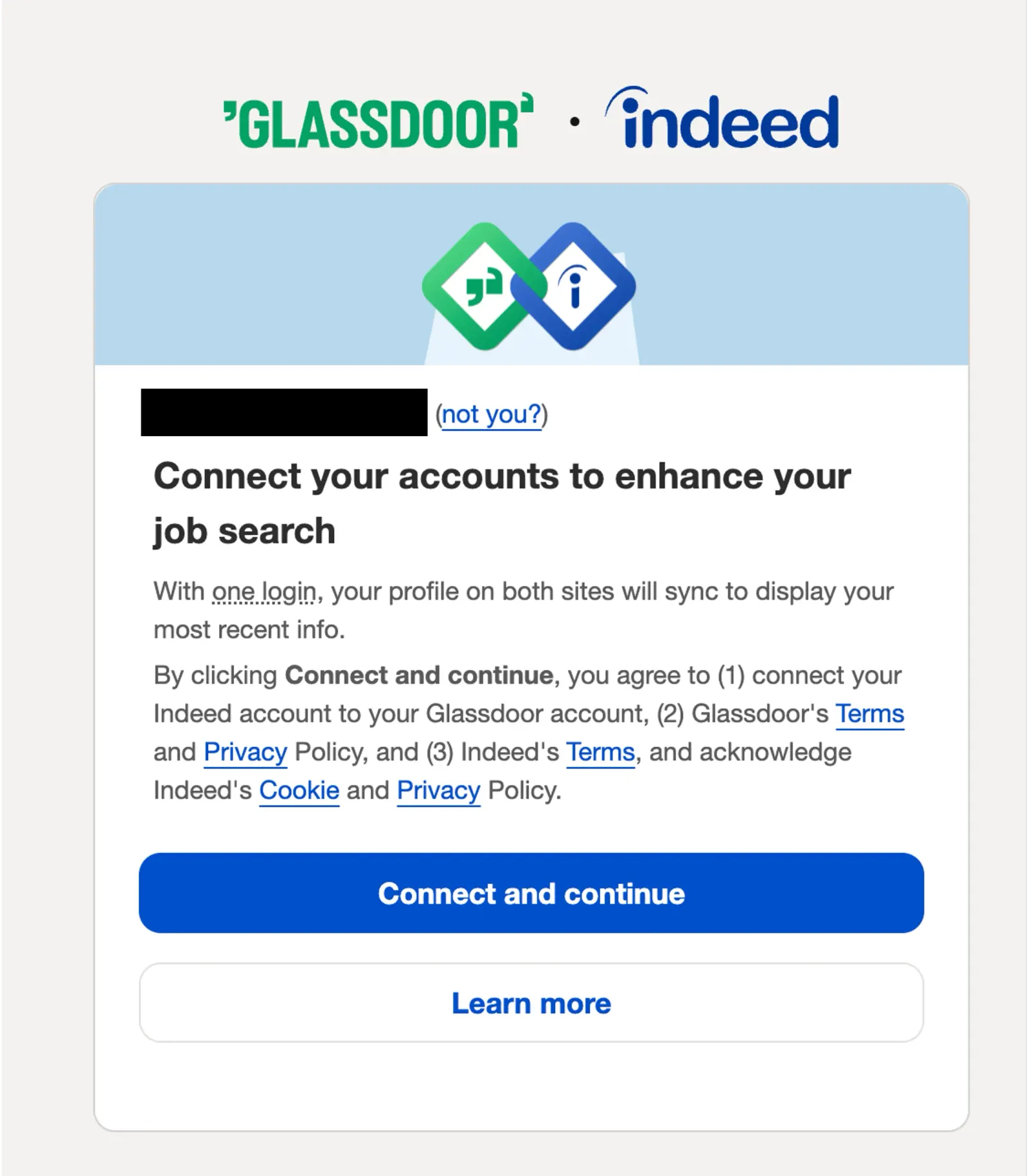
What gets synced: By connecting your Glassdoor and Indeed accounts, you create a "Connected Profile" in which your name, email address, and resume are shared across both platforms automatically.
The irreversibility problem: Once you link your accounts, you cannot unlink them. The only way to separate your data is to delete one of the accounts entirely. If you delete your Indeed account, you lose the ability to sign into Glassdoor with it, and your Glassdoor data still exists separately unless you delete that account too. These are two separate deletion actions.
The resume conflict: If you maintained different resumes on Indeed and Glassdoor, a common practice for job seekers targeting different industries or roles, the merger resolves the conflict simply: the most recent resume is kept. There is no merge or version control. If you uploaded a targeted resume to one platform more recently than the other, that's the one that survives.
Optimization tactics: protecting and optimizing your Connected Profile
- Before connecting accounts, download both your Indeed and Glassdoor resumes. Save them locally with clear file names (e.g.,
Resume_Indeed_Marketing_2026.pdf). This gives you a backup before the sync deletes the older version. - Decide which resume should be your "master" version. Upload it to Indeed first, then connect your Glassdoor account. That ensures the preferred version is the most recent one and survives the sync.
- Review your privacy settings on both platforms immediately after linking. Both platforms have granular controls over what employers see; make sure your settings reflect your current job search status.
- Do not connect your accounts if you are currently employed and passive job searching without first checking what your profile visibility is set to. A connected profile with an active resume can become visible to employers, potentially including your own, depending on your settings.
- If you want a clean break from either platform, delete in this order: delete Glassdoor first (while you can still log in via legacy or Indeed), then delete Indeed. Reversing the order leaves orphaned data.
The anonymity question: is Glassdoor still safe for honest reviews?
Glassdoor built its brand on a promise: workers could rate employers, share salaries, and describe workplace culture without their employer knowing who said what. That promise is now more complicated.
The official line: Indeed and Glassdoor both state that anonymous reviews, salary submissions, and community posts will remain anonymous to employers after account linking, for previously posted content and new content alike.
The honest caveat: Glassdoor's own privacy policy has long acknowledged that it cannot guarantee anonymity, noting that "depending on the specific situation and information disclosed, someone may be able to identify a user or narrow down their identity to a small group of people." This caveat existed before the merger, but it carries significantly more weight now. Previously, your Glassdoor account was a standalone identity. Now it is linked to a profile containing your name, email, and resume. The risk of cross-referencing increases when more identifying data points sit together in one system, even without any malicious platform behavior.
What this means practically: If you work at a small company and are one of only a few people who could plausibly have written a specific review, the technical anonymity of your account offers limited real-world protection regardless of merger status. That was always true. What has changed is that the platform now holds a richer data set about you in one place, and the institutional separation between "the review platform" and "the job application platform" no longer exists.
Optimization tactics: managing your review footprint
- Review your existing Glassdoor content before connecting accounts. If any reviews contain identifying details (specific dates, unique projects, department-specific language), consider editing them to be less traceable before linking.
- Don't include identifying specifics in new reviews, even with anonymity settings enabled. This is best practice regardless of merger status.
- If anonymity is critical to you, particularly if you're reviewing a current employer, consider whether posting on Glassdoor is the right channel at all. Other platforms and communities (industry Slack groups, Blind, Reddit communities) use different anonymity architectures.
Who should lean into the combined platform (and who should diversify away)
Use Indeed + Glassdoor as your primary hub if you are:
- A mid-career professional in a mainstream industry (tech, finance, healthcare, marketing, operations) where job volume is high and employer review data is genuinely useful for company research
- An active job seeker who benefits from having a single, well-maintained profile seen by a large employer audience
- Someone targeting large or mid-size companies, since these employers are most likely to maintain paid Indeed visibility and have robust Glassdoor review histories
Reduce your dependence on the combined platform if you are:
- A blue-collar, local-services, or trade worker. The March 2026 free-listing changes hit smaller employers hardest, meaning fewer relevant jobs are appearing.
- A passive job seeker who values privacy. A connected profile with resume sync is a significant data exposure for someone who isn't actively looking.
- Searching for roles at small or startup employers who may have shifted spend away from Indeed as free visibility dried up.
- Relying on Glassdoor specifically for anonymous culture research. Your comfort level with the anonymity caveats should now inform how much you trust what you read (and post).
Your 2026 job search workflow using the combined platform
Here's a repeatable action sequence that works with the new reality of the merged platform:
- Audit both accounts first. Log in to Indeed and Glassdoor separately. Download your resume from each. Screenshot your review history and profile settings.
- Decide on your master resume. Choose the version you want to survive the sync and upload it as your most recent file on Indeed before connecting.
- Connect your accounts intentionally. Go to Glassdoor's account settings and follow the Indeed login prompt. Read the data-sharing confirmation screen before clicking. This is irreversible.
- Set your job search visibility correctly. On Indeed, go to your profile and set your resume visibility to "Standard" (visible to employers searching for candidates) or "Private" (only you can see it) based on your current situation. Passive seekers should set to Private until ready.
- Use Glassdoor for company research before applying on Indeed. A combined profile doesn't mean a combined search workflow. Use Glassdoor's salary data and culture reviews to qualify a target employer, then use Indeed's Apply system to submit your application.
- Supplement with at least one other platform. LinkedIn remains essential for networking and recruiter outreach. For niche roles, add a specialist board (Wellfound for startups, Dice for tech, Mediabistro for media, etc.). Don't let the combined Indeed-Glassdoor reach push you into single-platform dependency.
- Set a 30-day check-in. The platform is still evolving. Set a calendar reminder to review your privacy settings, check for any new policy updates, and confirm your resume is still the version you intended.
Frequently asked questions
Do I have to connect my Glassdoor account to Indeed?
Yes, if you want continued full access to Glassdoor. As of April 20, 2026, existing users who did not connect their accounts lost access to full platform features. New users have been required to use an Indeed login since November 18, 2025. This is not optional; it is a condition of use.
What happens to my Glassdoor reviews if I connect my accounts?
According to Indeed and Glassdoor, existing anonymous reviews remain anonymous to employers after account linking. However, Glassdoor's privacy policy has always included a caveat that anonymity cannot be fully guaranteed depending on the nature of the content and context. Your reviews won't be publicly attributed to you, but the underlying data linking your review to your full profile now exists within one system.
Will connecting my accounts make my resume visible to my current employer?
Not automatically, but your visibility settings matter enormously. If your Indeed resume is set to "Standard" visibility (searchable by employers), connecting your accounts and syncing your profile could make you discoverable. Before linking, go to your Indeed profile and set resume visibility to "Private" if you're a passive seeker or currently employed and not ready for your resume to circulate.
Are there fewer jobs on Indeed now than before the merger?
For certain job categories, yes. As of March 31, 2026, Indeed removed guaranteed free organic visibility for jobs posted via single-source feeds without ATS integration. Smaller employers who relied on free listings may have reduced their Indeed presence. The platform remains the largest single job board by volume, but job seekers in blue-collar, local service, and small-employer markets may find the quality and diversity of listings has declined.
Can I delete one account without deleting the other?
Yes, but it's complicated. If you delete your Indeed account, you cannot use it to sign into Glassdoor, but your Glassdoor account still exists and must be deleted separately. Likewise, deleting Glassdoor does not affect your Indeed account. If your goal is complete data removal from both platforms, you must submit two separate deletion requests. There is no joint "delete everything" option.
Editor's Picks
 News
News 3 Industries Actually Hiring in 2026 (And How to Break In Fast)
Jul 13, 2026
 News
News 584K Jobs Cut in 2026: What's Gone and Where to Pivot Now
Jul 13, 2026
 Interviews
 Your 7-Day Interview Prep Plan: Land the Job in 2026
Jul 13, 2026
 Industries
 AI Is Cutting These Tech Jobs in 2026 — and Creating These New Ones
Jul 13, 2026