Best Entry-Level Healthcare Jobs in 2026 (No Degree Needed)
Discover the best entry-level healthcare jobs in 2026 that don't require a degree — with salary data, certifications, hiring trends, and action steps to get hired fast.

Healthcare Is Hiring, And You Don't Need a Four-Year Degree
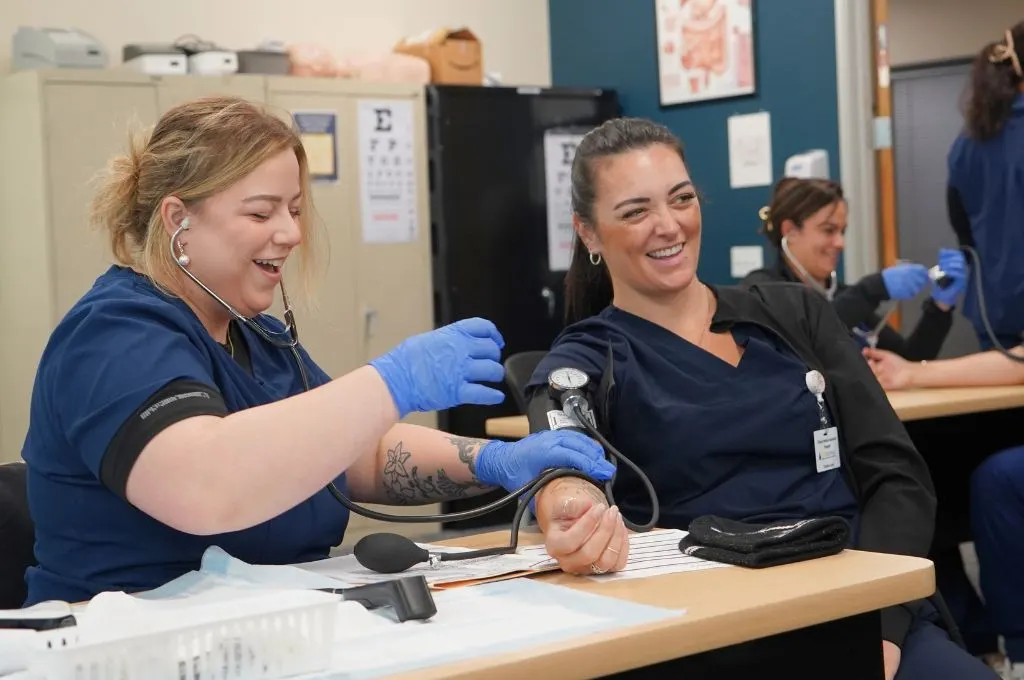
Healthcare isn't just a stable industry in 2026. It's essentially carrying the entire U.S. job market. In January 2026 alone, healthcare added approximately 82,000 jobs, accounting for nearly 63% of all new jobs created nationwide that month. Ambulatory care services led the way, with physician offices, home healthcare, and outpatient centers driving the bulk of hiring. Looking further out, the healthcare and social assistance sector is projected to grow 8.4% and add roughly 2.0 million jobs between 2024 and 2034, the fastest growth and largest absolute gain of any sector in the economy.
Here's the part that often surprises job seekers: you don't need a bachelor's degree to break in. In 2023, over 24% of all healthcare workers held only a high school diploma, according to the U.S. Bureau of Labor Statistics. Most entry-level healthcare roles are credential-driven, not degree-driven, meaning a focused certification program of a few weeks to 12 months can legitimately get you hired in a clinical setting. With 1.9 million healthcare job openings projected annually through 2034, the window to enter this field has rarely been wider or more accessible.
This guide covers the most in-demand no-degree healthcare roles in 2026, what they pay, what certifications you need, and exactly how to land one.
Most in-demand entry-level healthcare roles in 2026

These are the highest-opportunity positions for candidates without a four-year degree, ranked by hiring volume, growth trajectory, and accessibility of training:
- Medical Assistant: Handles both clinical tasks (vitals, injections, blood draws) and administrative work (scheduling, records, insurance); projected 12.5% job growth through 2034.
- Phlebotomist: Draws blood samples for laboratory testing; one of the fastest healthcare credentials to earn, often in weeks.
- Certified Nursing Assistant (CNA): Provides direct patient care in hospitals, nursing homes, and home settings; demand is high and growing with an aging population.
- Home Health Aide (HHA): Assists elderly or disabled clients with daily living activities in residential settings; among the fastest-growing roles in the entire economy.
- Medical Billing and Coding Specialist: Translates clinical documentation into standardized codes for insurance reimbursement; largely remote-friendly and fully office-based.
- Pharmacy Technician: Supports pharmacists in dispensing medications, processing prescriptions, and managing inventory in retail or hospital pharmacies.
- Emergency Medical Technician (EMT): Responds to emergency calls, provides pre-hospital care, and transports patients; requires state licensure but no college degree.
- Dental Assistant: Assists dentists during procedures, takes X-rays, and handles patient prep and sterilization in dental offices.
Every one of these roles is accessible through a certificate program, a short-term training course, or employer-sponsored on-the-job training. No four-year degree required.
Realistic salary ranges in 2026
Compensation in entry-level healthcare varies by role, setting, and geography, but it is consistently rising. The phlebotomist median wage, for example, has grown every year since 2019. Here's a snapshot of current earning potential across the most accessible roles:
| Role | Entry-Level | Median (National) | Experienced / Top 25% |
|---|---|---|---|
| Medical Assistant | ~$36,000 | $44,200 | $54,000+ |
| Phlebotomist | ~$36,000 | $45,230 | $57,000+ |
| Certified Nursing Assistant (CNA) | ~$32,000 | $38,200 | $46,000+ |
| Home Health Aide | ~$29,000 | $35,100 | $42,000+ |
| Medical Billing & Coding Specialist | ~$38,000 | $48,800 | $65,000+ |
| Pharmacy Technician | ~$33,000 | $40,300 | $52,000+ |
| EMT (Basic) | ~$35,000 | $40,900 | $58,000+ |
| Dental Assistant | ~$36,000 | $45,100 | $57,000+ |
A few salary factors worth knowing: outpatient care centers and hospitals typically pay medical assistants more than physician offices do. Phlebotomists working in hospital labs or on mobile teams often earn a shift differential. Medical billing and coding is the most remote-friendly role on this list, and remote workers in high-cost metros can often negotiate at or above the national median. CNAs and HHAs earn more in states with strong labor protections (California, New York, Washington) and within unionized hospital systems.
Required qualifications and skills
Hard requirements by role
- ✅ Medical Assistant: Certificate or diploma program (9-12 months); CMA (AAMA) or RMA (AMT) certification strongly preferred by most employers
- ✅ Phlebotomist: Short-term training program (a few weeks to several months); certification through NHA (CPT) or ASCP (PBT) preferred; some states require licensure
- ✅ CNA: State-approved CNA training program (4-12 weeks); must pass state competency exam; state registry listing required
- ✅ Home Health Aide: HHA training per state regulations (75+ hours federally mandated for Medicare-certified agencies); competency evaluation required
- ✅ Medical Billing and Coding: CPC (AAPC) or CCS (AHIMA) certification; familiarity with ICD-10-CM, CPT, and HCPCS code sets
- ✅ Pharmacy Technician: High school diploma; PTCB (CPhT) or NHA (ExCPT) certification; state registration or licensure varies
- ✅ EMT: EMT-Basic training (120-150 hours); NREMT exam; state licensure required
- ✅ Dental Assistant: Program length varies (9 months to 2 years); radiography certification often required; DANB CDA credential valued by employers
What employers actually prioritize beyond the certification
In healthcare support roles, soft skills and professional behavior carry real weight because staff interact directly with patients in vulnerable moments. Employers in 2026 specifically look for candidates who stay calm under pressure: clinical environments move fast, and mistakes carry real consequences. Attention to detail is non-negotiable, especially in phlebotomy, billing, and pharmacy roles where errors have downstream clinical or financial impact. Empathy and patient communication matter enormously for CNAs, HHAs, and medical assistants who spend the most face time with patients. Hiring managers in clinics and hospitals also flag reliability and punctuality as top screening criteria. Healthcare runs on schedules, and absent staff create cascading problems. If you can demonstrate these traits through references, clinical externship evaluations, or concrete examples in an interview, you will stand out.
Hiring trends and industry forces reshaping the field in 2026
The shift toward outpatient and home-based care is the single biggest structural trend in healthcare hiring right now. As hospitals push care delivery into clinics, urgent care centers, and patients' homes, the demand for mobile and community-based roles (HHAs, mobile phlebotomists, outpatient medical assistants) is accelerating faster than hospital-based hiring.
Trend 1: Ambulatory care is the hiring engine. Physician offices, home health services, and outpatient centers added over 50,000 jobs in a single month in early 2026. This is where entry-level candidates should focus their job search, not just large hospital systems.
Trend 2: Remote healthcare administration is now a stable career path. Medical billing, coding, and prior authorization roles have matured into fully legitimate remote positions. Employers no longer view remote coding as experimental. It's standard operating procedure at most large health systems and third-party billing companies.
Trend 3: Aging demographics are a decade-long hiring guarantee. The U.S. population aged 65+ continues to grow, and this cohort consumes healthcare services at a significantly higher rate. CNA and HHA demand is structurally tied to this demographic shift, not to economic cycles. These roles are recession-resistant in a way that few other entry-level jobs are.
On the technology front, AI-assisted coding tools and EHR automation are changing how billing and coding specialists work, but these tools are making entry-level coders more productive, not replacing them. Employers now expect familiarity with platforms like Epic, Meditech, or Kareo; candidates who can name the systems they've trained on or used during externships have a real edge.
Industry-specific resume and interview tips
Landing a healthcare job without a degree means your resume and interview answers need to do more work than the credential alone. Here's how to compete:
List your certification prominently, above your work history if you're new. Put "CMA (AAMA)" or "Certified Phlebotomy Technician (NHA)" directly below your name in a credentials line. Recruiters scanning 50 applications need to see it immediately.
Quantify your clinical externship hours. Don't just say "completed externship." Write: "Completed 160-hour clinical externship at [facility name]; performed 80+ venipunctures under supervision." Numbers signal readiness in a way that vague descriptions don't.
Use the right EHR keywords. If your training program used Epic, Meditech, or eClinicalWorks, name them explicitly. Many healthcare employers use ATS filters for system familiarity, and "electronic health records" alone won't trigger a match.
In interviews, lead with patient-facing stories. Healthcare hiring managers want evidence of empathy and composure. Prepare a specific example from a volunteer role, externship, or even caregiving for a family member where you had to manage a stressed or difficult patient interaction. Structure it with a clear situation, what you did, and the outcome.
Know the setting you're applying to. A hospital ED runs very differently from a physician's office or a home health agency. Research the specific employer before your interview and mention something specific (their patient population, their specialty, or a recent expansion) to show you chose them deliberately.
Don't undersell soft skills in your cover letter. In healthcare, "reliable, detail-oriented team player" reads as filler. Instead, write: "During my CNA training, I was selected to mentor new students on infection control protocols", that's a soft skill made concrete and credible.
Is this industry right for you?
Use this quick checklist to self-assess before committing to a certification program or application campaign:
| You're a strong fit if… | This may not be the right fit if… |
|---|---|
| You want job security that doesn't fluctuate with economic cycles | You need a fully remote role immediately (most clinical roles require on-site presence) |
| You're comfortable with physical work, irregular hours, or shift work | You're squeamish around blood, bodily fluids, or medical equipment |
| You want a clear certification-to-job pipeline with a defined timeline | You're expecting six-figure starting pay without further education |
| You're motivated by helping people in direct, tangible ways | You prefer autonomous, independent work over team-based clinical environments |
| You want a career ladder with room to grow (MA to RN, CNA to LPN, etc.) | You're unwilling to complete any formal training or certification |
| You want regional job portability, credentials transfer across most U.S. states | You want a field where credentials stay static and no ongoing education is required |
If you checked three or more items in the left column, healthcare is a genuinely strong career match for you in 2026. If you checked multiple items on the right side, consider whether a healthcare-adjacent role (medical billing and coding, health IT, or medical transcription) might be a better initial fit.
Next steps to break in or level up
You've done the research. Here's exactly what to do next:
Pick one role and commit to the certification path. Don't spend forever evaluating every option. Based on your timeline and budget, choose one credential (CNA, CMA, CPT for phlebotomy, or CPC for billing) and enroll in a program. Community colleges and accredited online providers like Penn Foster, Carrus, or local community colleges often have programs starting monthly.
Check your state's specific requirements before enrolling. CNAs, EMTs, and pharmacy technicians have state-specific licensing requirements that vary significantly. Visit your state health department or licensing board website before you sign up for any program to confirm you're training on the right pathway.
Target ambulatory and outpatient employers first. Physician offices, urgent care chains (like MedExpress or CityMD), outpatient surgery centers, and home health agencies are where the majority of entry-level openings are in 2026, and they're often more willing to hire new grads than large hospital systems.
Build a small professional network before you graduate. Join your certification organization's student community (AAMA, AAPC, AHIMA, and AMT all have student memberships), connect with your externship supervisors on LinkedIn, and attend at least one local healthcare career fair or job board event. Many healthcare jobs at small practices are filled through referrals, not posted online.
Apply to multiple settings, not just one. New graduates often focus only on hospitals. But hospital HR departments are slow and competitive. Apply simultaneously to clinics, private practices, long-term care facilities, schools, and occupational health centers. You'll get faster responses and more interview practice.
Plan your next credential from day one. Entry-level healthcare is a launchpad, not a ceiling. Decide now whether your two-year goal is RN school, a specialized phlebotomy certification, a CPC-A credential, or an advanced practice track. Employers will ask about your career goals, and having a real answer signals ambition and reduces turnover risk in their eyes, which makes you a more attractive hire from the start.
Editor's Picks
 News
News AI Layoffs 2026: Record Profits, Pink Slips & Jobs That Survive
Jul 20, 2026
 Industries
 AI & ML Engineer Jobs 2026: Salaries, Skills & How to Break In
Jul 20, 2026
 Skills
 AI Skills Non-Tech Workers Actually Need to Get Hired in 2026
Jul 20, 2026
 Job Search
 Hidden Job Market 2026: Land Roles Never Posted Online
Jul 20, 2026