15 Non-Clinical Healthcare Jobs Booming in 2026 (Real Salaries)
Discover 15 non-clinical healthcare jobs booming in 2026, with real salary data, growth rates, required credentials, and actionable steps to break in or level up.

The non-clinical healthcare boom: why 2026 is the year to move
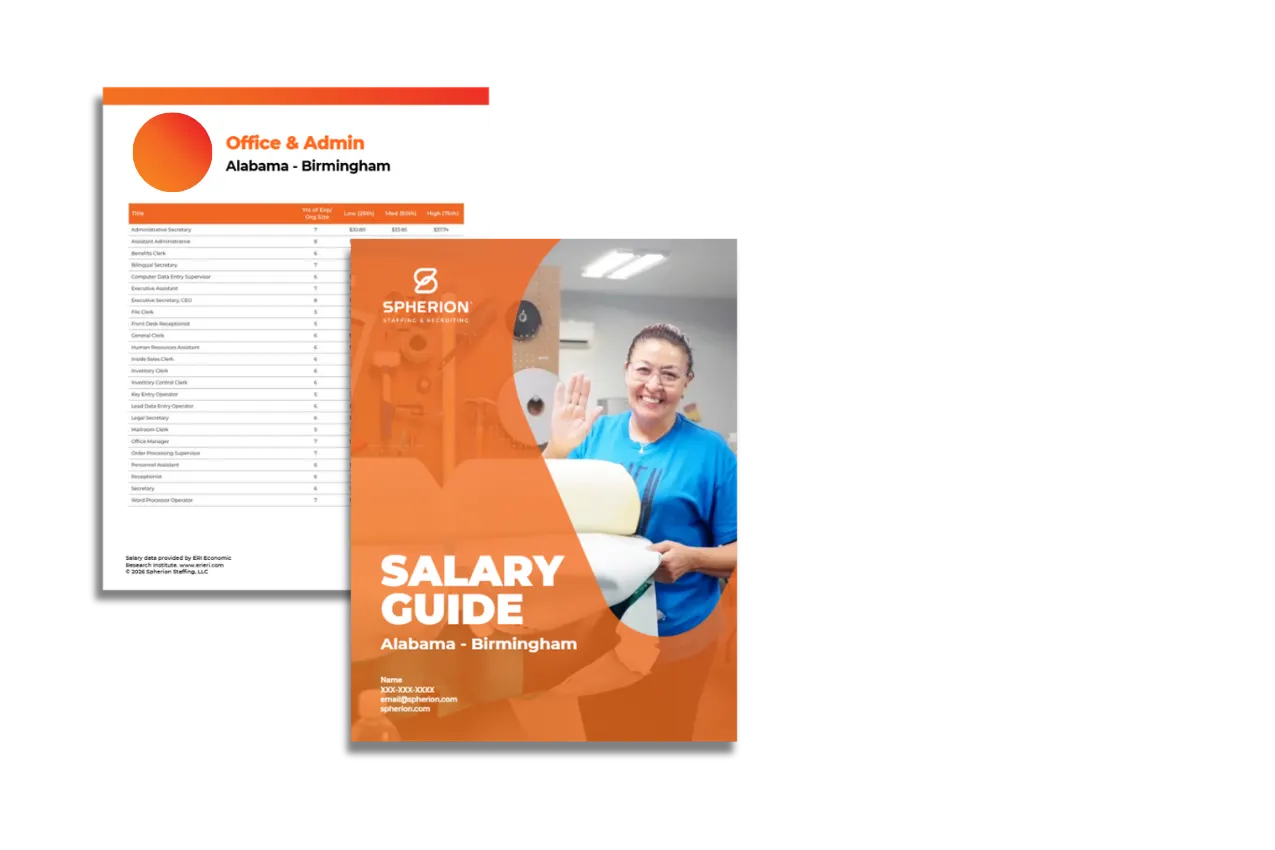
Healthcare isn't just growing. It's growing at a pace that makes most other sectors look stagnant. In January 2026 alone, the U.S. healthcare industry added 82,000 jobs, more than double the 44,000 it added in January 2025, and accounted for over half of all 130,000 jobs added to the economy that month. The Bureau of Labor Statistics projects roughly 1.9 million healthcare job openings annually through 2034, with sector employment growing far faster than the national average of 3.1%.
Here's what most job seekers miss: you don't need a stethoscope to benefit from this boom. Non-clinical roles (the people managing data, running operations, navigating regulations, and building the digital infrastructure of modern medicine) are among the fastest-growing and best-compensated positions in the entire economy. In 2026, demand is accelerating in digital health, AI-assisted operations, health informatics, patient advocacy, and revenue cycle management. Employers are paying a premium for professionals who can bridge clinical environments with business and technology expertise.
This guide profiles 15 of those roles, with real salaries, verified growth projections, required credentials, and a clear path to getting hired.
The 15 non-clinical healthcare roles booming in 2026

Here's a quick overview before we go deep on each one:
| # | Role | Why demand is up in 2026 |
|---|---|---|
| 1 | Healthcare Administrator / Medical & Health Services Manager | System expansion, leadership gaps at scale |
| 2 | Health Informatics Specialist | EHR adoption, AI integration, data-driven care |
| 3 | Healthcare Data Analyst | Predictive analytics, cost reduction mandates |
| 4 | Revenue Cycle Manager | Billing complexity, reimbursement reform |
| 5 | Health Information Technician / Medical Coder | ICD-11 transition, remote-friendly, coding backlogs |
| 6 | Healthcare Compliance Officer | Regulatory expansion, HIPAA enforcement, telehealth rules |
| 7 | Patient Advocate / Patient Navigator | Value-based care models, health equity mandates |
| 8 | Healthcare IT Project Manager | EHR upgrades, digital health deployments |
| 9 | Medical Writer / Healthcare Content Strategist | Pharma, medical devices, digital health communications |
| 10 | Health Educator / Community Health Worker | Preventive care funding, CMS community programs |
| 11 | Healthcare Recruiter / Talent Acquisition Specialist | Staffing crisis driving permanent in-house recruitment |
| 12 | Clinical Research Coordinator (Non-Clinical Track) | Trial volume growth, pharma pipeline expansion |
| 13 | Telehealth Operations Coordinator | Telehealth permanence post-pandemic |
| 14 | Healthcare Supply Chain Manager | Post-pandemic resilience investment |
| 15 | Health Policy Analyst | Federal/state regulatory churn, value-based care transition |
Real salary ranges for 2026
Compensation in non-clinical healthcare is tiered by experience, credentials, and specialisation. Here's where the real money sits across the 15 roles:
| Role | Entry-Level | Mid-Career | Senior/Executive |
|---|---|---|---|
| Healthcare Administrator | $69,680 | $90,000, $150,000 | $250,000, $500,000+ |
| Health Informatics Specialist | $60,000, $80,000 | $85,000, $110,000 | $130,000, $160,000 |
| Healthcare Data Analyst | $55,000, $70,000 | $80,000, $105,000 | $120,000, $145,000 |
| Revenue Cycle Manager | $55,000, $75,000 | $85,000, $115,000 | $130,000, $160,000 |
| Health Information Tech / Coder | $45,000, $60,000 | $65,000, $85,000 | $90,000, $110,000 |
| Healthcare Compliance Officer | $60,000, $80,000 | $90,000, $120,000 | $140,000, $180,000 |
| Patient Advocate / Navigator | $40,000, $55,000 | $60,000, $80,000 | $85,000, $110,000 |
| Healthcare IT Project Manager | $70,000, $90,000 | $100,000, $130,000 | $140,000, $175,000 |
| Medical Writer | $55,000, $75,000 | $80,000, $105,000 | $110,000, $140,000 |
| Health Educator / CHW | $38,000, $52,000 | $55,000, $75,000 | $80,000, $100,000 |
| Healthcare Recruiter | $50,000, $65,000 | $70,000, $95,000 | $100,000, $130,000 |
| Clinical Research Coordinator | $50,000, $65,000 | $70,000, $95,000 | $100,000, $130,000 |
| Telehealth Operations Coordinator | $48,000, $65,000 | $70,000, $90,000 | $95,000, $120,000 |
| Healthcare Supply Chain Manager | $60,000, $80,000 | $90,000, $120,000 | $130,000, $170,000 |
| Health Policy Analyst | $55,000, $72,000 | $80,000, $110,000 | $120,000, $160,000 |
One number worth noting: according to industry data, 79% of non-clinical healthcare leaders pay higher salaries to candidates with specialised skills than to peers in the same role without them. Credentials, software fluency (Epic, Cerner, Tableau), and domain expertise are direct salary multipliers, not optional extras.
Required qualifications and skills
Hard requirements by role type
Administrative and operations roles (Healthcare Administrator, Telehealth Coordinator, Supply Chain Manager):
- ✅ Bachelor's degree in Healthcare Administration, Business, or a related field (minimum)
- ✅ Master's in Healthcare Administration (MHA) or MBA with a healthcare focus for mid-to-senior roles
- ✅ Certifications: Fellow of the American College of Healthcare Executives (FACHE), Certified Medical Manager (CMM)
Data, IT, and informatics roles (Health Informatics Specialist, Data Analyst, IT Project Manager):
- ✅ Bachelor's in Health Informatics, Computer Science, Information Systems, or related field
- ✅ Master's degree yields a 15, 25% salary premium and opens leadership pathways
- ✅ Certifications: Registered Health Information Administrator (RHIA), Certified Associate in Project Management (CAPM/PMP), Epic/Cerner system credentials
- ✅ Proficiency in SQL, Python, Tableau, and Power BI is increasingly expected
Compliance, policy, and legal roles (Compliance Officer, Health Policy Analyst):
- ✅ Bachelor's in Healthcare, Law, Public Health, or Public Policy
- ✅ Certifications: Certified in Healthcare Compliance (CHC), Certified Compliance and Ethics Professional (CCEP)
- ✅ Deep knowledge of HIPAA, CMS regulations, and applicable state law
Clinical research, medical writing, and patient advocacy:
- ✅ Bachelor's in Life Sciences, Communications, Public Health, or Nursing (for research tracks)
- ✅ Certifications: Certified Clinical Research Associate (CCRA), American Medical Writers Association (AMWA) credentials
- ✅ Experience with IRB processes, clinical trial phases, or case management systems
Revenue cycle and coding:
- ✅ Certifications are often sufficient at entry level: CPC (Certified Professional Coder), CCS (Certified Coding Specialist), CRCS (Certified Revenue Cycle Specialist)
- ✅ ICD-10/ICD-11 proficiency is non-negotiable
What employers actually prioritise in 2026
Beyond credentials, healthcare hiring managers in 2026 are taking a capability-driven approach. They screen for professionals who can operate effectively across complex, multi-system workflows: someone who understands how a scheduling bottleneck ripples into billing errors and patient satisfaction scores. Critical thinking applied to AI-generated outputs is rapidly becoming a must-have. As automation embeds itself deeper into EHR documentation, prior authorisation, and patient communication, employers want people who can evaluate, validate, and act on what the algorithm produces rather than simply accept it. Communication across clinical and non-clinical teams, change management experience, and data literacy are the soft-skill combination that consistently separates candidates at the interview stage.
Hiring trends and industry forces reshaping non-clinical healthcare in 2026
"Healthcare added more jobs in one month of 2026 than most industries add in a year, and most of those openings don't require clinical licensure."
Three forces are defining who gets hired and at what salary in non-clinical healthcare right now.
1. AI integration is creating new roles and restructuring old ones. Automation is not eliminating non-clinical healthcare jobs; it's changing their shape. Revenue cycle teams are shrinking their manual coding headcount but paying significantly more for analysts who can manage AI-assisted claim scrubbing tools and interpret denial pattern data. Health informatics is becoming a specialty in its own right, with demand for professionals who can design, implement, and audit AI-powered clinical decision support systems. Job seekers who position themselves as "AI-fluent humans" rather than AI-replaceable workers are commanding 10, 20% salary premiums over peers with the same titles.
2. Telehealth's permanence is reshaping operations and compliance. Telehealth is no longer a pandemic workaround. It's a permanent care delivery channel with its own operational, regulatory, and workforce requirements. Telehealth Operations Coordinators, compliance officers who specialise in multi-state licensure rules, and health IT professionals with telehealth platform experience (Teladoc, Doxy.me, Zoom Health) are in strong demand. This is one of the clearest entry points for career changers from operations or customer-facing tech roles.
"Remote-friendliness is highest in informatics, data analytics, medical writing, health IT, and revenue cycle, making these roles accessible to international job seekers."
3. Value-based care is driving demand for patient-facing non-clinical roles. As CMS continues pushing the U.S. system toward value-based reimbursement models, health systems are investing heavily in care coordination infrastructure. Patient navigators, health educators, and community health workers are being hired in volume, not as volunteers or afterthoughts, but as salaried staff integral to quality metrics and risk-adjustment scores. The BLS projects community health worker employment to grow significantly through 2034, and 2026 hiring data confirms that trajectory.
Industry-specific resume and interview tips
Lead with EHR and system fluency upfront. Epic, Cerner, Oracle Health, and Meditech are the operating systems of modern healthcare. If you have hands-on experience with any of them, name the specific module (Epic Ambulatory, Cerner PowerChart, etc.) in your resume summary and skills section, not buried in job descriptions. Applicant tracking systems at large health systems explicitly scan for these terms.
Quantify outcomes in business language, not clinical language. Non-clinical hiring managers respond to metrics: "reduced claim denial rate from 14% to 6% in 8 months," "managed $4.2M departmental budget," or "decreased patient no-show rate by 22% through scheduling redesign." Clinical jargon without business impact is noise.
For compliance and policy roles, cite specific regulations you've worked under. Don't say "familiar with HIPAA." Say "developed and implemented HIPAA Privacy Rule training curriculum for 200+ staff, achieving 100% completion prior to CMS audit." Specificity signals real experience versus resume padding.
In interviews, be ready for scenario-based questions about AI and workflow change. A growing number of healthcare operations interviews in 2026 include questions like: "How would you validate the output of an AI-assisted prior authorisation tool?" or "Walk me through how you'd handle a failed EHR migration." These aren't technical trick questions. They test change management thinking and cross-functional communication.
Tailor your LinkedIn profile for healthcare's keyword ecosystem. Healthcare recruiters search LinkedIn using very specific terms: "revenue cycle," "value-based care," "population health," "care coordination," "ICD-11," "HEDIS measures." Use these in your About section and Experience entries, not just your Skills list.
For career changers, lead with transferable domain expertise. Former finance professionals moving into revenue cycle should frame banking compliance experience as directly applicable to CMS billing regulations. Former IT project managers should highlight any work in regulated industries (finance, pharma, government). The pivot story needs to be told proactively. Don't make the hiring manager do the translation work.
Is non-clinical healthcare right for you?
Use this self-qualification checklist before committing to a pivot or job search in this sector:
| ✅ Strong fit if you... | ❌ Reconsider if you... |
|---|---|
| Want job security backed by structural demographic demand | Expect a fast, unstructured startup environment |
| Can navigate bureaucracy and policy-driven constraints | Struggle with compliance-heavy or documentation-intensive work |
| Are energised by improving systems rather than treating patients | Want direct, hands-on patient care |
| Have data literacy or are willing to develop it | Prefer purely qualitative, relationship-only roles |
| Want remote or hybrid flexibility (especially in IT/data/coding roles) | Need a role with no evening or weekend operational coverage |
| Are a career changer with transferable skills from IT, finance, or business | Expect immediate senior-level compensation without healthcare-specific credentials |
| Want meaningful work in a mission-driven sector | Are motivated exclusively by profit maximisation |
The best-fit profile for non-clinical healthcare in 2026: analytically minded, comfortable with complex workflows, genuinely interested in health outcomes (even without delivering care), and willing to invest in at least one sector-specific credential. Career changers from IT, finance, public policy, and operations management are particularly well-positioned.
Next steps to break in or level up
Follow these six moves in sequence. Each one builds momentum toward your first or next non-clinical healthcare role.
Identify your lane using the salary table above. Don't search generically across "non-clinical healthcare." Pick one role cluster (data/informatics, operations/administration, compliance, or patient-facing coordination) based on your transferable background and target salary band. Specificity wins.
Earn a targeted entry-level credential within 90 days. For coding and revenue cycle: sit for the CPC exam through AAPC (achievable in 6, 12 weeks of self-study). For health informatics: complete a foundational course through AHIMA or Coursera's health data specialisations. For compliance: pursue the CHC through the Compliance Certification Board. These credentials show up on ATS keyword scans and signal sector commitment to hiring managers.
Join the professional association for your target role. AAPC (coders/revenue cycle), AHIMA (health information and informatics), HFMA (healthcare finance), AMWA (medical writers), and ACHE (healthcare executives) all have job boards, mentorship networks, and local chapter events that surface unadvertised opportunities. Membership fees pay back in first-year salary gains.
Rebuild your resume around healthcare operations language. Use the keywords from section five above. If you don't have an ATS-optimised healthcare resume, rewrite your top three bullet points for each role using this format: [Action verb] + [Healthcare-specific system or process] + [Quantified business outcome]. That formula alone will increase your callback rate.
Target health systems, not just hospitals. The largest non-clinical hiring organisations in 2026 are integrated delivery networks (Kaiser Permanente, HCA Healthcare, Intermountain Health, CommonSpirit), large physician practice management groups, and digital health companies (Teladoc, Veradigm, Optum). All three categories post heavily on LinkedIn, Indeed, and their own career portals. Set up targeted job alerts with role-specific keywords, not just "healthcare."
Position for a remote-first application strategy if you're an international job seeker. Health informatics, revenue cycle, medical writing, health IT project management, and data analytics roles are among the most remote-friendly in the sector. U.S.-based employers regularly hire international contractors and full-time employees in these functions. Lead your applications with system-specific credentials and quantified results. Geography is a diminishing barrier in these roles.
Editor's Picks
 News
News AI Layoffs 2026: Record Profits, Pink Slips & Jobs That Survive
Jul 20, 2026
 Industries
 AI & ML Engineer Jobs 2026: Salaries, Skills & How to Break In
Jul 20, 2026
 Skills
 AI Skills Non-Tech Workers Actually Need to Get Hired in 2026
Jul 20, 2026
 Job Search
 Hidden Job Market 2026: Land Roles Never Posted Online
Jul 20, 2026