AI Skills Non-Tech Workers Actually Need to Get Hired in 2026
Discover the AI skills non-tech workers need to get hired in 2026 — from prompt engineering to workflow automation — with actionable steps to build and prove them.

AI Skills Non-Tech Workers Actually Need to Get Hired in 2026
AI skills are no longer just for engineers. In 2026, over 56% of AI-related job postings are outside the tech sector, and jobs requiring AI skills are growing nearly eight times faster than the overall job market.
If you work in marketing, HR, finance, project management, or operations, employers are already filtering for AI competency. The gap between candidates who can demonstrate it and those who can't is widening fast. US job postings requiring AI skills grew 144% year over year as of April 2026, according to the Bipartisan Policy Center's AI Skills Dashboard. That's not a future trend. It's the hiring reality right now.
What "AI skills for non-tech workers" actually means

Worth being precise here, because this phrase gets misused constantly. AI skills for non-technical professionals are not about writing code, training machine learning models, or understanding neural network architecture. Those are engineering jobs.
What employers mean when they list AI skills in a non-technical job posting is more practical: Can you use AI tools effectively in your daily work? Can you spot where AI should (and shouldn't) be trusted? Can you design or improve a workflow that includes AI? Can you communicate clearly enough to get reliable, useful output from these tools? That's it. It's the difference between a professional who treats ChatGPT like a fancy search engine and one who uses it as a genuine force multiplier.
There are three discrete, learnable skill layers that non-tech workers need to focus on in 2026: AI literacy, prompt engineering, and AI workflow integration. Each builds on the last, and each is something you can develop without touching a single line of code.
Why employers are actively hiring for these skills right now

The demand signal is unusually clear and consistent across multiple data sources.
- Wage premium is real and large. PwC's 2026 Global AI Jobs Barometer, which analyzed over one billion job ads across six continents, found that workers with AI skills earn a 62% wage premium on average over peers without those skills. Lightcast puts the salary gap at roughly $18,000 more per year in the US.
- Non-tech sectors are leading adoption. Job ads for sales managers saw a 149% increase in AI skill requirements. Marketing managers: 142%. Management analysts: 67%. HR and talent acquisition roles: 66%, the fastest-growing sector for AI hiring signals.
- Generative AI roles outside tech grew 800% since 2022, according to Lightcast. The growth is no longer confined to Silicon Valley job titles.
- AI-mentioning postings are bucking the flat market. Overall job postings are stagnant or declining in many occupations. But postings that mention AI skills are growing in HR, banking and finance, marketing, project management, accounting, and management. Candidates who can make the case for AI competency are being rewarded for it.
- LinkedIn literacy growth confirms the shift. AI literacy skills added by LinkedIn members have increased 177% since 2023, meaning your peers are upskilling now. The window to stand out is still open, but it is closing.
The core takeaway: this isn't about AI replacing jobs. It's about a two-track job market where professionals with AI skills are being hired faster, paid more, and trusted with higher-judgment work, while those without are competing for a shrinking share of postings.
How to build each AI skill layer (beginner to advanced)
Think of this as a three-tier roadmap. You don't need to master all three at once. Identify where you are and move up one level.
Tier 1: AI literacy (start here)
What it is: Understanding what AI tools do, where they fail, and how to evaluate their outputs critically.
How to build it:
- Spend 30 minutes daily for two weeks using a general-purpose AI tool (Claude, ChatGPT, or Microsoft Copilot) for real work tasks: drafting emails, summarizing documents, brainstorming ideas.
- Complete Google's free "AI Essentials" course (available on Coursera). It's designed for non-technical professionals and takes about 10 hours.
- Read AI-generated output critically. Fact-check three claims per session until it becomes instinct. This is how you build calibrated trust.
- Complete Microsoft's "Career Essentials in Generative AI" on LinkedIn Learning (free with a LinkedIn account), which covers practical workplace applications without any coding.
Milestone: You can describe, in a job interview, a specific work task where you used an AI tool, what the output was, and how you verified or refined it.
Tier 2: Prompt engineering (the skill employers notice)
What it is: Writing clear, structured instructions that get AI tools to produce accurate, useful output consistently, not just occasionally.
O'Reilly reported a 456% increase in prompt engineering usage in 2025. The global prompt engineering market is growing at a 32.8% CAGR. Most employers aren't hiring dedicated "Prompt Engineers." They're looking for marketers, analysts, HR managers, and project leads who are genuinely skilled at directing AI tools as part of their regular role.
How to build it:
- Learn the core framework: Role, Task, Context, Format, Constraints. This five-part structure produces dramatically better results than a one-line question.
- Practice on real deliverables. Take a task you do every week (a status update, a report summary, a client email) and build a reusable prompt template for it.
- Take "ChatGPT Prompt Engineering for Developers" on DeepLearning.AI (free). Despite the title, about 80% of the content applies directly to non-technical roles.
- Build a personal prompt library: a document of 10 to 15 proven prompts for your specific job function. This becomes a portfolio piece you can mention in interviews.
Intermediate challenge: Take a prompt that gives you mediocre output and iterate it (using specificity, examples, and constraints) until the output is usable on the first try. Document the before and after.
Tier 3: AI workflow integration and no-code automation (the differentiator)
What it is: Identifying where AI can improve a real process, choosing the right tool, and building or proposing a system that makes the team measurably faster.
AI workflow integration doesn't mean building software. It means looking at a repeating business process (onboarding new employees, generating weekly reports, triaging customer emails, briefing a creative team) and redesigning it so AI handles the repetitive, predictable parts while humans handle the judgment calls.
How to build it:
- Map one current process you own or contribute to. Identify which steps are repetitive, rules-based, or time-consuming. Those are your AI candidates.
- Experiment with Zapier (which now has native AI integration), Make (formerly Integromat), or Microsoft Power Automate. All have no-code interfaces and free tiers.
- Learn to use Notion AI, Slack AI, or your organization's existing Microsoft 365 or Google Workspace AI features. Adopting embedded AI in familiar tools is the fastest path to workflow impact.
- Take "No-Code AI" courses on Coursera or Udemy to understand how to deploy AI-powered solutions using platforms like Zapier or Make without engineering support.
Advanced milestone: You can describe a before/after workflow you redesigned (with specific time or quality metrics) and explain what you would do differently at a new employer.
How to show AI skills to employers (resume and interview)
Building the skill is half the battle. Communicating it credibly is the other half. Here's how to do both.
On your resume
Weak (generic): "Proficient in AI tools." Strong (specific): "Used Claude and Microsoft Copilot to automate weekly competitor analysis reports, reducing research time by 4 hours per week and improving consistency across a 12-person marketing team."
The formula is: Tool + Task + Outcome (quantified where possible). Never list an AI tool without pairing it with what you achieved using it.
Additional resume tactics:
- Add a "Tools & Technologies" section that lists specific platforms: ChatGPT, Claude, Copilot, Gemini, Jasper, Notion AI, Zapier AI, etc.
- Under each role, include at least one bullet that shows AI in action, not AI as a noun but as part of a verb-driven accomplishment.
- If you've built a prompt library or redesigned a workflow, list it as a project.
In interviews
Use the STAR method (Situation, Task, Action, Result) to structure AI-related answers:
"Our team was spending about six hours per week compiling performance data into slide decks [Situation]. I was asked to find a faster way [Task]. I built a prompt template in ChatGPT that pulled from our standardized data format and generated a first-draft narrative in under 10 minutes [Action]. We cut the weekly reporting time by roughly 70%, which freed up the analyst to focus on interpretation rather than formatting [Result]."
If you don't yet have a work example, use a personal project or side experiment: built a prompt library, redesigned a freelance workflow, used AI to prep for this interview. Employers in 2026 respect self-directed learning. What they don't reward is vague familiarity with no proof.
Skill-gap self-assessment: where do you actually stand?
Answer these questions honestly to locate yourself on the skill spectrum:
- Can you name three specific AI tools relevant to your industry and explain what each does?
- Have you used an AI tool to complete a real work task (not just experiment) in the last 30 days?
- Can you write a prompt that produces usable output on the first or second try, consistently?
- Have you ever revised a prompt based on a bad output and gotten a better result?
- Can you identify at least one repeating process in your current (or most recent) role where AI could reduce time or error?
- Do you have a concrete, quantified example of AI use you could describe in a job interview today?
Scoring:
- 0 to 2 checked: Start at Tier 1. Prioritize AI Literacy this month.
- 3 to 4 checked: You're mid-tier. Focus on Prompt Engineering and building real examples.
- 5 to 6 checked: You're in the top cohort. Focus on workflow integration and articulating your impact in job applications.
Your next step: do this before you apply to another job
Before you send another application, do this one thing: rewrite one bullet point on your resume to include a specific AI tool and a measurable outcome.
If you don't have one yet, that's your signal. Open Claude, ChatGPT, or Copilot today, pick a real task you need to do this week, and use it. Document what you tried, what worked, and what the result was. That's your first interview answer. Then work through Tier 1 of this roadmap over the next two weeks.
The 2026 job market is not waiting for workers to become AI experts. It's rewarding workers who can show they're already using AI intelligently, right now, in roles that have nothing to do with engineering. That's your competitive opening.
Editor's Picks
 News
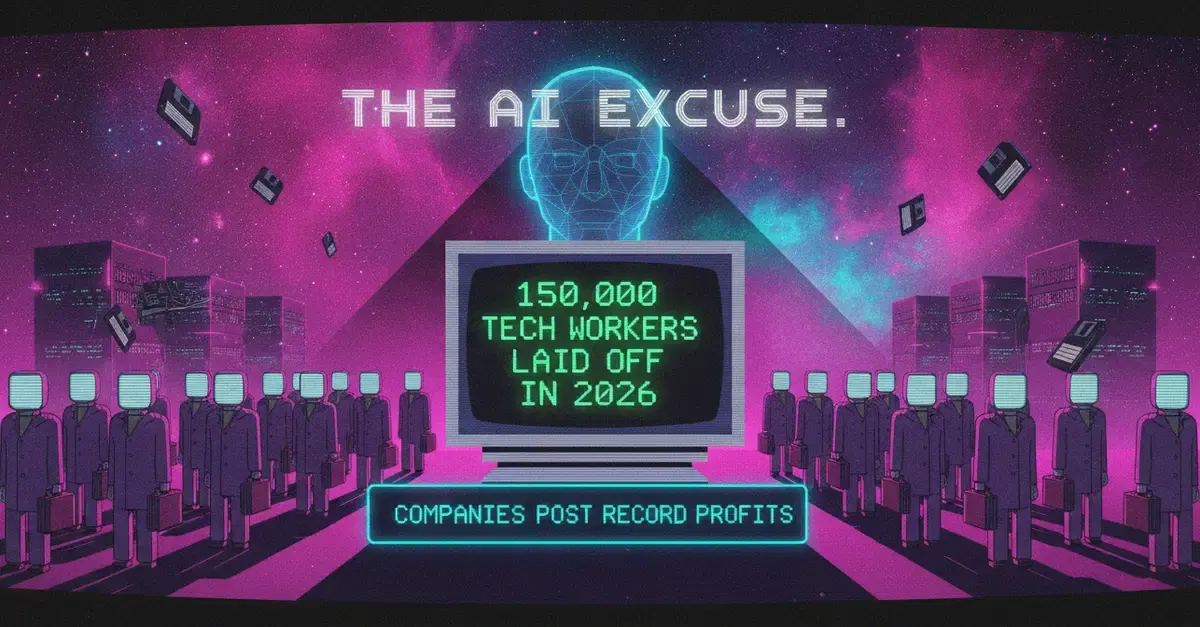
News AI Layoffs 2026: Record Profits, Pink Slips & Jobs That Survive
Jul 20, 2026
 Industries
 AI & ML Engineer Jobs 2026: Salaries, Skills & How to Break In
Jul 20, 2026
 Job Search
 Hidden Job Market 2026: Land Roles Never Posted Online
Jul 20, 2026
 Resume
 One Page vs. Two Page Resume in 2026: What the Data Says
Jul 20, 2026