One Page vs. Two Page Resume in 2026: What the Data Says
One page or two? 2026 recruiter data, ATS facts, and a career-stage decision framework so you know exactly how long your resume should be.
One Page vs. Two Page Resume in 2026: What the Data Says
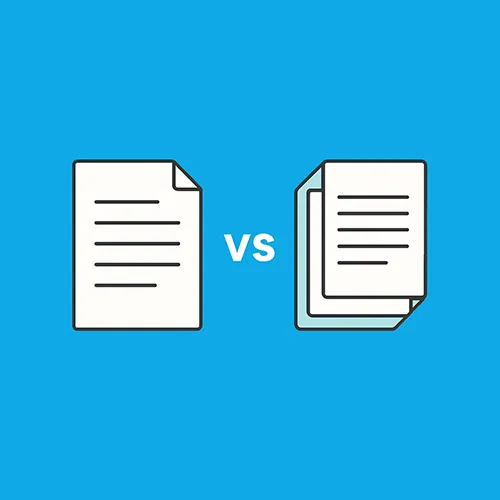
You've probably heard the rule a hundred times: keep your resume to one page. Career counselors said it. Your university's career center put it in a handout. And for decades, candidates dutifully crammed ten years of work history into 11-point font to comply. The problem? The data no longer supports it, and in 2026, following that rule could actually be costing you callbacks. When 68.3% of HR professionals now consider a two-page resume ideal and only 21.8% still prefer one page (Novorésumé, 2025), the old one-page mandate has quietly become outdated advice that hurts well-qualified candidates.
This is not just a minor shift in preference. It is a complete inversion. And yet the myth persists, especially for mid-career professionals who were trained on it, and for recent graduates who were told it is the only "professional" option. This article breaks down exactly what the current data says, when one page still wins, when two pages is the right call, and how to make every inch of whichever length you choose count.
The one-page myth is officially dead
The old "one-page rule" was never a universal law. It was a rough heuristic born in an era when resumes were physically mailed and recruiters had no digital tools to help them triage applications. In 2026, that world no longer exists.
The principle that should replace it: your resume should be as long as it needs to be to make a compelling case for your candidacy, no longer and no shorter. The goal is maximum signal per page, not minimum page count. A dense, cramped one-pager that omits your most relevant accomplishments is objectively worse than a clean, well-structured two-pager that gives a recruiter everything they need to say yes.
What the data confirms is that recruiters are no longer rewarding brevity for its own sake. A landmark ResumeGo study involving 482 recruitment professionals reviewing 7,712 resumes found that two-page resumes were chosen 2.3 times more often than one-page resumes. Recruiters also spent nearly twice as long reading them: 4 minutes 5 seconds on two-page resumes versus 2 minutes 24 seconds on one-pagers. More reading time means more opportunity to build the case that you are the right hire. The question is no longer "can I fit this on one page?" It is "am I using the space I have to maximum effect?"
What the 2026 data actually says: a side-by-side view
Before making any decision about your own resume, it helps to see all the numbers together. Here is what the research shows:
| Data Source | Finding |
|---|---|
| Novorésumé (200+ HR professionals, 2025) | 68.3% prefer two pages; 21.8% prefer one page |
| Resume Genius Hiring Trends Survey (625 managers, 2024) | 54% favor two-page resumes |
| AiApply (1,013 HR professionals, 2025) | 51% prefer two pages; 31% prefer one page |
| Criteria (2024 report) | 53% of recruiters expect two-page resumes |
| StandOut CV survey | 90% of recruiters prefer two pages; only 3% say three pages is ideal |
| ResumeGo (7,712 resumes reviewed) | Two-page resumes chosen 2.3x more often than one-page |
| Resume.io (2025) | Average resume length is already 1.6 pages |
| Enhancv analysis | 47% of resumes are two pages; 43% are one page |
One number cuts the other way: 17% of hiring managers still consider anything longer than one page a deal-breaker. That is a real minority, but it is large enough to matter, especially in industries and roles where brevity is culturally expected. This is why audience awareness still applies, even as the overall trend tilts heavily toward two pages.
How to decide your correct resume length in 6 steps
Use this decision framework before you write a single word. These steps apply regardless of your career stage.
Audit your career stage first. Your years of experience are the single biggest determinant of appropriate length. The consensus from HR data is clear: 0 to 3 years of experience means one page. Four to 10 years means one to two pages, depending on relevance. Ten or more years means two pages is standard; three pages is defensible in very specific cases (academia, C-suite, federal roles). If you have 15 years of experience and you are forcing yourself onto one page, you are leaving your strongest work out entirely.
Count only relevant experience, not all experience. Before deciding page count, strip your resume down to what is actually relevant to the role you are targeting. A career changer with 12 years in retail pivoting to UX research does not need to document every retail shift. They need to surface the research, data, and customer insight components of that background. Relevant content drives length. Padding does not.
Apply the "bottom of page 1" test. Open your resume and look at where page 1 ends. If it ends halfway through a job, mid-paragraph, or at a visually awkward break, that is a formatting problem, not a length problem. Page 1 must be complete and compelling on its own. A recruiter who only reads page 1 (and 42% of HR professionals spend less than 10 seconds on first review, per Novorésumé) should walk away with a clear picture of who you are and what you offer. Your name, title, summary, and two to three strongest accomplishments must all live on page 1.
Check your keyword density before adding length. According to Jobscan's State of the Job Search 2025 report, 99.7% of recruiters use keyword filters in their ATS. A resume that is too short risks missing critical keywords. Before you decide to stay at one page, run your resume through a keyword comparison against the job description. If you are missing five or more target keywords, expanding to two pages to include them naturally, in context, is a legitimate strategy and not padding.
Apply the "would a recruiter want this?" filter to every line. Go line by line and ask: does this help a recruiter decide to call me? If it does not (hobbies that do not support your candidacy, redundant job duties listed multiple times, an "objective statement" that describes what you want rather than what you offer), cut it regardless of whether you are at one page or two.
Validate against your target industry. Some industries have strong cultural norms. Tech startups often prefer lean, one-page resumes that mirror the "ship fast" culture. Academic positions, government roles, and executive leadership positions routinely expect two to three pages. Financial services and consulting are increasingly two-page friendly. When in doubt, look at job postings in your target industry for cues, or ask a recruiter in that space directly.
How this changes depending on where you are in your career
Recent graduates and students (0 to 2 years)
The old advice (one page for new grads) still holds, but for a different reason than most people think. It is not a rule; it is math. If you have two years or less of professional experience, you probably do not have enough genuinely relevant content to fill two pages without padding. One strong page beats two thin pages every time. Focus on internships, relevant coursework, projects, volunteer roles, and any quantified outcomes. The ResumeGo data does show that even for entry-level positions, employers were 1.4 times as likely to prefer two pages over one, but only when those two pages contained substantive content.
Mid-career professionals (5 to 15 years)
This is the group most damaged by the one-page myth. If you have a decade of relevant experience and you are still forcing everything onto one page, you are almost certainly either omitting key accomplishments or presenting them so briefly they lose their impact. Two pages is your default. Use both pages deliberately: page 1 for your most recent and relevant roles with strong, quantified bullet points; page 2 for older roles (summarized more briefly), education, certifications, and any additional skills or accomplishments.
Career changers
Career changers face a unique challenge: their experience is real and substantial, but not always directly titled to match the new field. Two pages gives you the space to reframe. Lead with a strong summary that bridges your previous background to your target role. Use page 1 to highlight transferable skills and accomplishments that translate. Use page 2 for older or less relevant roles, listed more briefly, plus education and any new credentials you have earned for the pivot.
Senior leaders and executives (15+ years)
At the executive level, two pages is a baseline expectation. The question is not whether to use two pages; it is whether a third page is justified. The data says only 3% of recruiters consider three pages ideal, so treat a third page as a rare exception rather than a default. Academic CVs, federal resumes, and board-level bios operate under different conventions and are explicitly exempt from these norms.
Mistakes that undermine your resume length decision
- Padding to reach two pages. Adding filler (generic duties, irrelevant hobbies, an "Areas of Expertise" section that just repeats your skills section) is immediately visible to recruiters. Fix: only add content that answers "why should I hire this person?"
- Cramming to stay at one page. Shrinking margins to 0.4 inches, using 10-point font, and removing white space to force one page is a worse outcome than going to two pages cleanly. Fix: if your content legitimately fills 1.2 to 1.5 pages, let it breathe across two pages with proper formatting.
- Burying strong accomplishments on page 2. If your most impressive achievement is at the bottom of page 2, most recruiters will not see it. Fix: restructure so your three to five strongest data points appear in the top half of page 1.
- Treating ATS as a page-count gatekeeper. Modern ATS systems in 2026 do not penalize two-page resumes. What they penalize is low keyword density, broken formatting, and unconventional layouts. Fix: focus on keyword match and clean formatting, not page count.
- Using the same resume for every application. A two-page resume optimized for one role may be over- or under-length for another. Fix: maintain a "master" resume of all your experience and trim or expand it for each application based on relevance.
- Ignoring the work experience section hierarchy. 79.4% of hiring managers check your work experience section first. Fix: make sure your most recent role is fully developed and prominently placed, regardless of whether you are on one page or two.
Your resume length decision checklist
Use this before submitting any application. Check every box before you hit send.
Page count decision
- ✅ I have audited my experience and confirmed I have enough relevant content to justify my chosen length
- ✅ My career stage aligns with my page count (0 to 3 years = 1 page; 4+ years = 1 to 2 pages; 10+ years = 2 pages)
- ✅ I have not padded to reach a page count, nor crammed to avoid one
Page 1 quality check
- ✅ My name, current or target title, and contact info are at the top
- ✅ I have a clear resume summary (90% of hiring managers say it makes evaluation faster)
- ✅ My two to three strongest, most quantified accomplishments appear on page 1
- ✅ Page 1 ends at a natural, visually clean break point
ATS readiness
- ✅ I have compared my resume to the job description and confirmed keyword alignment
- ✅ My formatting uses standard fonts, clean section headers, and no tables or text boxes that break parsing
- ✅ My resume is not longer than two pages (or three only for academic/federal/executive roles)
Final relevance filter
- ✅ Every bullet point answers the question: "why should I hire this person for this role?"
- ✅ I have removed any content that does not support my candidacy for the specific role I am targeting
- ✅ I have read my resume aloud and it flows logically from summary to experience to supporting credentials
Frequently asked questions
Is a two-page resume okay for someone with only five years of experience? Yes, in most cases. The consensus from 2025 to 2026 recruiter surveys is that two pages is appropriate once you have around four or more years of relevant experience, especially if those years include multiple roles, projects, or accomplishments worth documenting. What matters is that both pages contain substantive, relevant content. If your second page is mostly white space or filler, trim back to one.
Will ATS systems reject or penalize my two-page resume? No. Modern ATS platforms in 2026 process two-page resumes identically to one-page resumes. Page count is not a variable that ATS scoring algorithms use. What ATS systems do penalize is low keyword match, non-standard formatting, unusual layouts, and missing structured sections. Focus your energy on those factors, not on squeezing everything onto one page.
What if the job posting says "one-page resumes preferred"? Follow the instruction. When an employer or recruiter explicitly states a length preference, that preference overrides the general data. Trim your resume to one strong page, prioritize your most relevant experience and accomplishments, and trust that a focused, well-curated one-pager is far better than a compliant but padded one.
Does resume length affect how long recruiters spend reading it? Yes, the data is clear on this. The ResumeGo study found recruiters spent an average of 4 minutes 5 seconds on two-page resumes versus 2 minutes 24 seconds on one-page resumes, nearly double the reading time. More time means more opportunity to make your case. That said, this only holds when page 2 contains genuinely useful information. A thin second page does not earn extra reading time.
Should I submit a two-page resume as one PDF or two separate files? Always one PDF. A two-page resume should be a single document with page 1 and page 2 together. Never submit separate files, and avoid submitting a Word document if you can. Formatting can shift unpredictably across systems, and a single, well-formatted PDF ensures your layout appears exactly as intended to both humans and ATS parsers.
Editor's Picks
 News
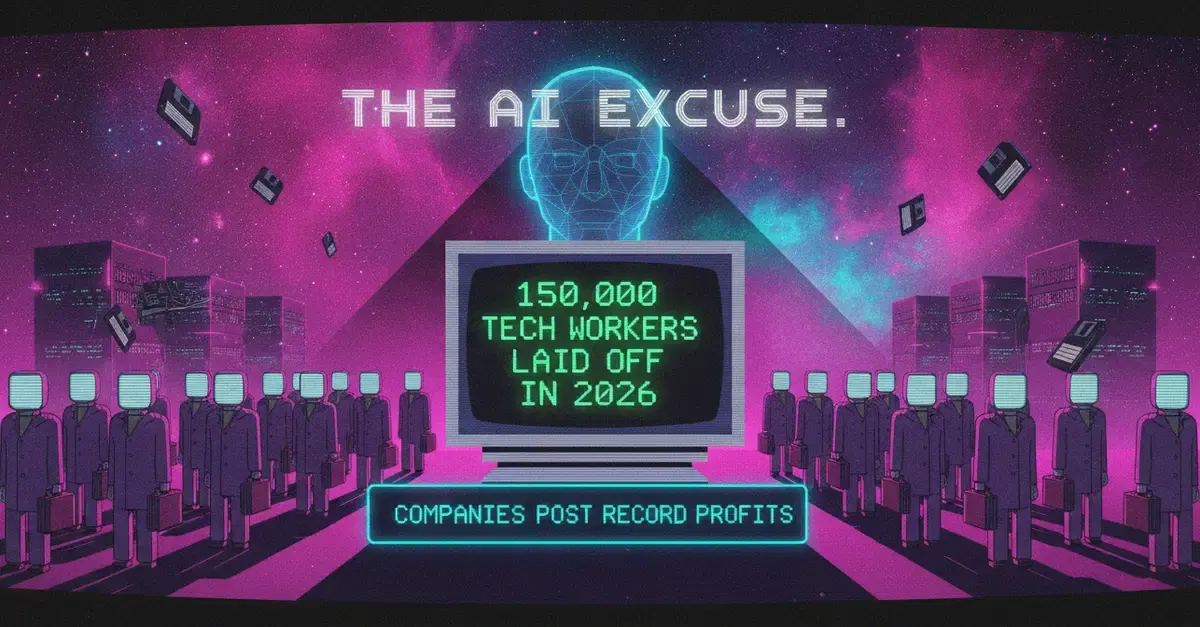
News AI Layoffs 2026: Record Profits, Pink Slips & Jobs That Survive
Jul 20, 2026
 Industries
 AI & ML Engineer Jobs 2026: Salaries, Skills & How to Break In
Jul 20, 2026
 Skills
 AI Skills Non-Tech Workers Actually Need to Get Hired in 2026
Jul 20, 2026
 Job Search
 Hidden Job Market 2026: Land Roles Never Posted Online
Jul 20, 2026