Hidden Job Market 2026: Land Roles Never Posted Online
Up to 80% of jobs are never posted online. Learn proven 2026 strategies to tap the hidden job market and land roles through networking, referrals, and direct outreach.

Hidden Job Market 2026: Land Roles Never Posted Online
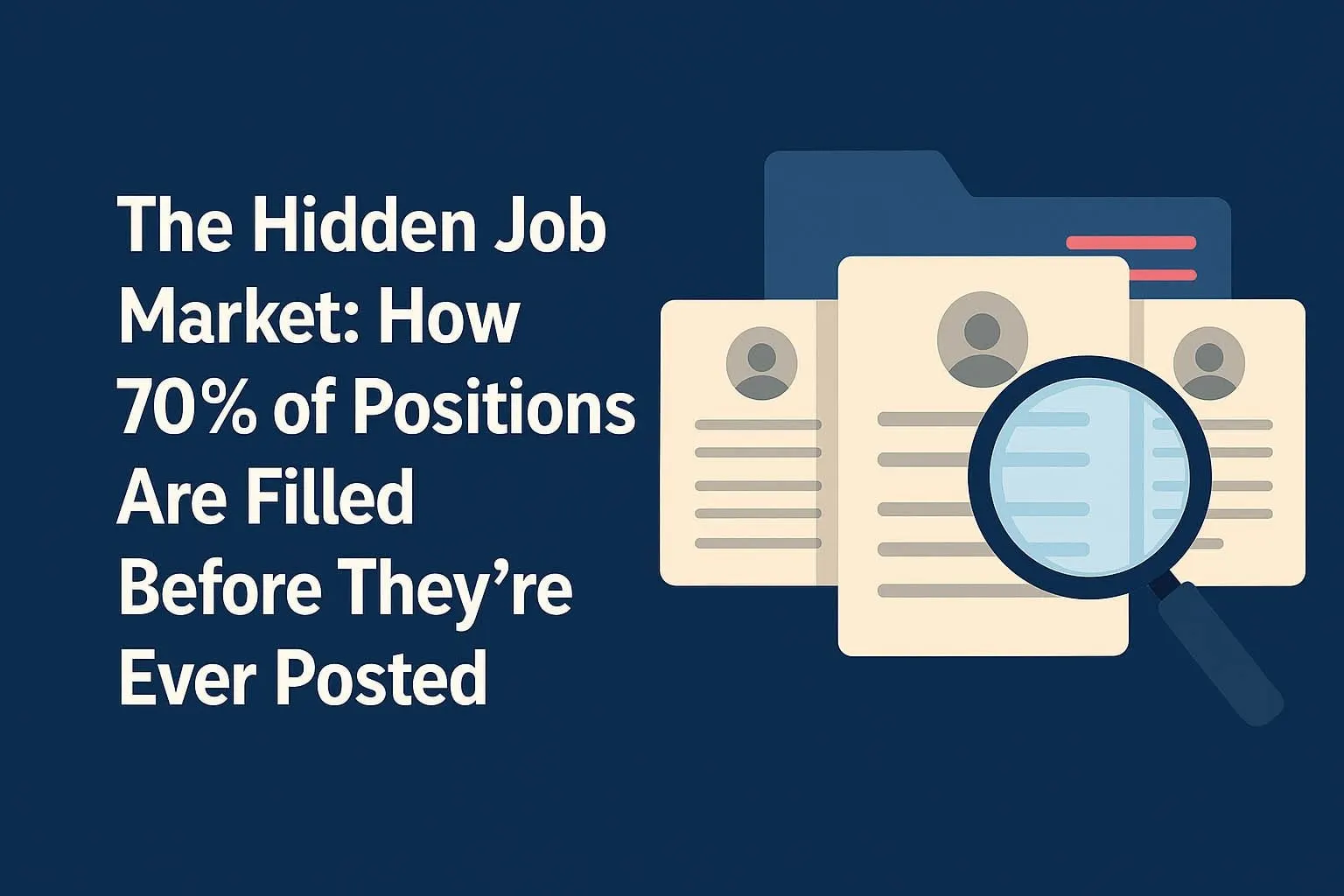
You've been refreshing job boards for weeks, submitting application after application into what feels like a black hole. Statistically, that's exactly what it is. The frustrating truth is that the jobs you can see online represent a small minority of the roles actually being filled right now. If you're an active or passive job seeker who wants to stop competing with hundreds of applicants for every listing and start getting conversations that actually lead somewhere, this article is for you. By the end, you'll have a concrete, repeatable system for accessing the hidden job market: the 70 to 80% of positions filled before they ever appear on a public job board.
Why the visible job market is broken in 2026
The online job market isn't just competitive. It's structurally stacked against applicants in ways that have gotten significantly worse. LinkedIn has reportedly seen peaks of 11,000 applications per minute, and the average job posting now receives 242 applications, roughly three times what it did in 2017. With that volume, your chances of standing out through a cold application have shrunk to near-statistical insignificance: only 6% of job board applications ever result in a hire.
Making things worse is the ghost job epidemic. A 2025 study by Greenhouse found that between 18% and 22% of all online job postings are ghost jobs, fake or dormant listings with no active hire behind them. A LiveCareer survey of 918 HR professionals revealed that 45% admit they "regularly" post ghost jobs and another 48% do so "occasionally," meaning 93% of HR professionals engage in this practice to some degree. Since early 2024, job openings have outnumbered actual hirings by more than 2.2 million per month (BLS data), a gap that exposes just how misleading the visible market really is. California even passed legislation in March 2025 requiring employers to disclose whether job postings represent actual vacancies, a law that wouldn't exist if the problem weren't widespread.
Meanwhile, the hidden job market runs on completely different numbers. Referral hires have a 43% conversion rate, compared to 6% for job board applications. Referred candidates are seven times more likely to be hired than cold applicants. A 2026 Bureau of Labor Statistics analysis found that job seekers who actively network land new roles in an average of 3.2 months, versus 5.8 months for those relying on online applications. The math isn't subtle: if you're not actively working the hidden job market, you're fighting over scraps while the feast happens elsewhere.
Your step-by-step system for accessing the hidden job market

Step 1: Map your network with intention
Most people think of networking as "who do I already know?" The 2026 approach is more deliberate. Start by building a Target Company List (TCL): 20 to 30 organizations where you'd genuinely want to work, based on industry, size, culture, and growth trajectory. Use LinkedIn's "People Also Viewed" and Crunchbase's funding data to find companies in adjacent spaces you might be overlooking.
Once you have your TCL, use LinkedIn to identify first- and second-degree connections at each company. Second-degree connections are your highest-value targets. You have a plausible path to an introduction, and research consistently shows that mutual-connection introductions convert at far higher rates than cold outreach. Track this in a simple spreadsheet: Company | Contact Name | Degree of Connection | Mutual Connection | Status | Last Touchpoint.
Step 2: Activate dormant connections before you ask for anything
Dormant ties, people you knew well but haven't spoken to in months or years, are consistently undervalued in job searches. Research on social networks shows that weak and dormant ties often provide access to entirely different information ecosystems than your active contacts. Before you need anything, spend two weeks re-engaging: comment thoughtfully on their LinkedIn posts, share an article relevant to their work, congratulate them on a recent promotion or company milestone. This isn't manipulation. It's relationship maintenance that you let lapse.
Only after two or three genuine touchpoints should you send a direct message. Keep it short, specific, and focused on learning, not asking for a job. A strong template: "Hi [Name], I've been following your work at [Company] and your perspective on [specific thing] really resonated with me. I'm currently exploring opportunities in [space] and would love to hear how you've seen things evolving from your vantage point. Would you be open to a 20-minute call sometime in the next few weeks?"
Step 3: Send speculative applications that actually get read
A speculative application (also called a proactive or uninvited application) is a direct outreach to a hiring manager or department head at a company on your TCL, sent with no job posting as a prompt. This works because sometimes the right candidate creates the role: companies have been known to build positions around impressive candidates they wouldn't have found any other way.
The key is targeting the right person and leading with value. Don't email HR. Email the person who would be your manager or the head of the function you'd join. Your message should:
- Open with a specific observation about their team, product, or a business challenge they're facing (show you've done real research)
- Name the value you'd bring in one or two concrete, metrics-backed sentences
- Make a low-commitment ask: a 15-minute conversation, not a job offer
Keep it under 150 words. Subject lines like "Idea for your Q3 pipeline / [Your Name]" or "[Mutual Contact] suggested I reach out" consistently outperform generic ones.
Step 4: Use alumni networks systematically
University alumni networks are one of the most underleveraged tools in a job search. People who share an alma mater respond to outreach at significantly higher rates than cold contacts. There's an existing social contract that makes the ask feel less transactional. In 2026, most major universities have dedicated alumni career portals, Slack communities, or LinkedIn groups. Use your school's alumni search to filter by company or industry on your TCL, then reach out with a warm, specific message that references your shared connection.
If you didn't attend a four-year university, professional associations serve the same function. Every major industry has at least one association (SHRM for HR, PMI for project management, AICPA for accounting) with member directories, local chapters, and events, all designed to create exactly the kind of warm connection that opens hidden job market doors.
Step 5: Engage recruiters who work exclusively in the hidden market
Executive search firms and retained recruiters specialize in filling roles that are never publicly posted. That's the entire value proposition they sell to employers. Build a list of 10 to 15 recruiters who specialize in your industry and seniority level. Connect with them on LinkedIn with a brief, professional note. Share your resume and a one-paragraph summary of what you're looking for, then stay visible: comment on their posts, send occasional relevant articles. When a confidential search opens in your space, you want to be top of mind.
For mid-level roles, contract and staffing agencies often have advance notice of permanent openings before they're posted publicly. Taking a contract-to-hire arrangement is a legitimate, often faster path into a company than applying for a full-time role cold.
Step 6: Attend industry events with a specific goal
In-person and virtual industry events (conferences, meetups, panels, workshops) are where hiring conversations begin. The goal is not to "network" in the vague sense but to have three to five substantive conversations per event with people on or adjacent to your TCL. Come prepared with a 30-second positioning statement, two or three smart questions about trends in the space, and business cards or a QR code linking to your LinkedIn profile.
Follow up within 24 hours with a specific reference to something from your conversation, not a generic "great to meet you." This single habit separates people who collect contacts from people who build relationships.
Common mistakes that kill your hidden job market efforts
Asking too soon. Reaching out to a connection with "do you know of any openings?" in your first message kills the relationship before it starts. Lead with curiosity and value; opportunities follow naturally.
Treating LinkedIn as a job board. LinkedIn's real power is in its social graph, not its listings. Spending 80% of your time on job applications and 20% on relationship-building inverts the optimal ratio for 2026 hiring conditions.
Ignoring second-degree connections. Many job seekers only reach out to people they know well. But a mutual-connection introduction to someone you've never met is often more powerful than a direct ask to a close friend in an unrelated field.
Sending generic speculative applications. A copy-paste email that could have been sent to anyone will be deleted by everyone. Every speculative outreach must contain at least one piece of specific, researched detail about that company or person.
Giving up after one touch. Studies on cold outreach consistently show that 70%+ of responses come after the second or third contact. One unanswered message is not a rejection. It's usually just poor timing.
Neglecting to keep your network warm while you're employed. The best time to build relationships is before you need them. Job seekers who regularly maintain connections throughout their careers enter the hidden job market with enormous advantages over those who only reach out when they're desperate.
Tools and platforms to work the hidden job market in 2026
Use this as your operational toolkit:
| Tool / Platform | Best Use |
|---|---|
| LinkedIn Sales Navigator | Advanced people searches, second-degree filtering, saved lead lists |
| Apollo.io | Find direct email addresses for hiring managers at target companies |
| Crunchbase | Identify companies with recent funding rounds (growth = hidden hiring) |
| Hunter.io | Verify and find professional email addresses for speculative outreach |
| Lunchclub | AI-matched professional networking calls with people in your industry |
| Slack communities | Industry-specific communities (e.g., Designer Hangout, Remote Work Slack) often have job channels before anything goes public |
| Handshake (alumni features) | For recent grads: connects alumni for career conversations |
| Meetup.com / Eventbrite | Find local and virtual industry events for in-person relationship building |
| Notion / Airtable | Build your Target Company List and track outreach touchpoints |
Outreach message template (speculative application):
Subject: [Specific angle, e.g., "Your team's approach to [X] / [Your Name]"]
Hi [First Name],
I came across your work on [specific project/article/post] and was genuinely impressed by [specific detail]. I'm a [title/role] with [X years] focused on [relevant specialty], and I've been following [Company] because of [specific, researched reason].
I'm not sure if you're currently building out your team, but I'd love a 15-minute conversation to hear your perspective on where [Company/Industry] is heading, and to share a few ideas I've been thinking about in this space.
Would any time in the next two weeks work for you?
[Name | LinkedIn URL]
Adapting the strategy to your situation
Career changers
If you're pivoting industries, your existing network may not have connections at your target companies. Focus on transferable skill storytelling in your outreach: lead with the problem you solve, not the industry you came from. Use professional associations in your new field to build credibility quickly. Treat informational interviews not just as networking tools but as genuine learning opportunities. Hiring managers in new industries respect intellectual curiosity and will remember it.
Remote work seekers
The hidden job market for remote roles is increasingly clustered in online communities rather than in-person events. Prioritize Slack workspaces, Discord servers, and LinkedIn groups in your target industry. Many fully remote companies post opportunities in their community channels days or weeks before (or instead of) publishing to job boards. Being an active, helpful contributor to these communities (answering questions, sharing resources) is the fastest way to become the person people think of when a role opens up.
Senior and executive candidates
At the VP, Director, or C-suite level, the hidden job market is essentially the only market. Executive search firms (retained recruiters) fill the majority of roles at this seniority level. In addition to cultivating recruiter relationships, focus on thought leadership: speaking at conferences, publishing on LinkedIn, contributing to industry publications. When a search firm conducts a confidential executive search, they often identify candidates through their public profile of expertise, not through cold outreach.
Entry-level and early-career candidates
Don't assume the hidden job market is only for experienced professionals. Internship-to-hire pipelines, campus recruiting, and alumni networks are all forms of hidden hiring that entry-level candidates can access. Focus on warm outreach to recent alumni at your target companies. They remember being where you are and are often genuinely willing to help. A referral from even a junior employee can move your resume from the pile to the hiring manager's desk.
Your hidden job market action checklist
Use this to track your progress and stay focused:
- Build a Target Company List (TCL) of 20 to 30 organizations
- Map first- and second-degree LinkedIn connections at each TCL company
- Identify 10 to 15 dormant connections worth re-engaging before asking for anything
- Send at least 3 re-engagement messages per week (no ask, genuine value)
- Draft a speculative outreach email template personalized for your top 5 TCL companies
- Connect with 10 to 15 industry-specific recruiters and share your background
- Join 2 to 3 industry Slack communities or professional associations in your target field
- Register for at least one in-person or virtual industry event this month
- Follow up on every networking conversation within 24 hours with a specific reference
- Set a weekly calendar block (minimum 60 minutes) for hidden job market activities
- Track all outreach in a spreadsheet: contact, date, follow-up date, outcome
- Review and update your LinkedIn profile so inbound recruiter interest can find you
Frequently asked questions
How big is the hidden job market really? Is 80% accurate? Multiple independent labor market studies consistently place the figure between 70% and 80% of all jobs never being publicly posted. The number varies by industry and seniority level (it skews even higher at the executive level), but the directional finding is consistent: the majority of hiring happens through relationships, referrals, and direct outreach rather than public job board applications.
How do I tap the hidden job market if I have a small network? Start with the network you have, then expand it deliberately. LinkedIn second-degree connections, alumni networks, professional associations, and industry events all give you structured, low-friction ways to meet relevant new people. The goal isn't a large network. It's a targeted one. Twenty strong connections in your target industry will outperform 2,000 generic LinkedIn connections every time.
Should I stop applying to job boards entirely? No, but rebalance your effort significantly. A good rule of thumb for 2026 is the 70/30 split: 70% of your job search time on relationship-building and hidden job market activities, 30% on selective, high-quality applications to posted roles. Apply to fewer positions and customize each application thoroughly rather than blasting out generic resumes.
What's the best way to ask a contact for a referral without being awkward? Be specific and make it easy for them. Instead of "can you refer me?", say: "I noticed [Company] is growing its [team/function] and I'd love to be considered for roles there. Would you be comfortable passing along my resume to [hiring manager/recruiter]? I've already done some research on the team and I think there's a strong fit." Giving them your resume, a brief summary of your experience, and the specific role type you're targeting removes friction and makes it easy to say yes.
How long does it take for hidden job market strategies to work? Networking-driven job searches move faster than you might expect once momentum builds. 2026 BLS data puts the average at 3.2 months for active networkers versus 5.8 months for those relying on job boards. The first few weeks feel slow because you're building relationships rather than getting immediate responses. Expect the first meaningful opportunities to surface 3 to 6 weeks after you begin consistent outreach, with the pipeline accelerating from there.
Editor's Picks
 News
News AI Layoffs 2026: Record Profits, Pink Slips & Jobs That Survive
Jul 20, 2026
 Industries
 AI & ML Engineer Jobs 2026: Salaries, Skills & How to Break In
Jul 20, 2026
 Skills
 AI Skills Non-Tech Workers Actually Need to Get Hired in 2026
Jul 20, 2026
 Resume
 One Page vs. Two Page Resume in 2026: What the Data Says
Jul 20, 2026